Bet With Crypto, No KYC? A Ghanaian Sports Bettor's Honest Explainer on Verification, Winnings and Wallet Safety
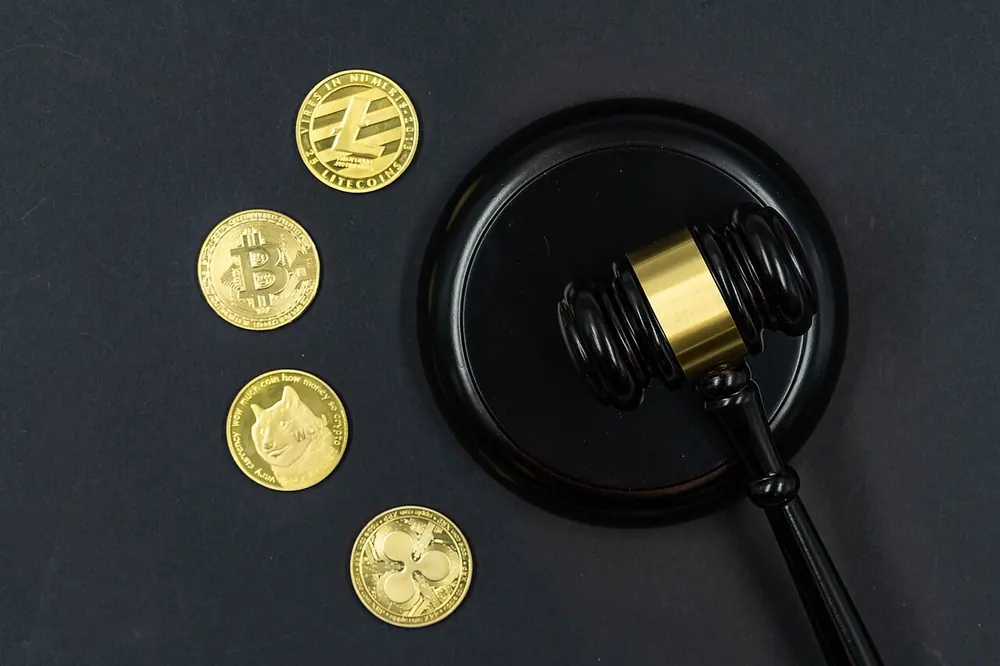
If you bet on football from Ghana, you've seen the pitch: "bet with crypto, no KYC, just connect your wallet and go." My brother, I get why it's attractive. Nobody enjoys photographing their Ghana Card at midnight before the EPL kicks off. But sports betting with crypto has its own twists that the casino-focused guides skip, especially what happens when you start winning. This page walks through all of it, straight.
Let me be clear about what this is: a factual explainer, not a guide to getting around identity checks. Trying to dodge verification is the fastest way to lose a balance. 18+ only. Cloudbet, the crypto sportsbook we link to, is licensed in Curaçao and is not licensed by the Gaming Commission of Ghana, so Ghana's regulator can't help you in a dispute with it.
18+. Crypto deposits. Cloudbet is licensed in Curaçao, not by the Gaming Commission of Ghana. Ad: we may earn a commission. Bet only what you can afford to lose.
Why "no KYC" sounds different for a sports bettor
A casino player and a sports bettor look different to an operator. Casino games carry a fixed house edge, so over thousands of spins the casino knows roughly what it will keep. Sportsbooks are different. A sharp punter who consistently finds good prices can actually take money off a book over time. That's why sportsbooks watch winners closely, and why the moment of verification for a bettor is often linked to winning, not just to depositing.
So when a crypto sportsbook says "no KYC", read it as: "you can open an account and bet small amounts without uploading documents today." It almost never means: "we will never ask who you are, no matter how much you win or withdraw."
The three moments a crypto sportsbook usually asks for ID
| Trigger | What it looks like for a bettor | Why the operator does it |
|---|---|---|
| Cumulative deposits pass a threshold | A pop-up asking for ID after you've funded the account several times | Anti-money-laundering rules attached to its licence |
| A large or unusual withdrawal | Your cash-out sits "pending" and support asks for documents | Checking the money goes back to the real account holder |
| Betting pattern review | Account flagged after big wins, arbitrage-style bets or bonus use | Detecting multi-accounting, bonus abuse, match-fixing links |
Cloudbet's terms, for example, require verification once cumulative deposits reach US$2,200, and also let it request documents at any time. That "at any time" clause appears in almost every crypto sportsbook's terms. It's the line that matters.
What happens to a winning slip during verification
Here's the scenario that hurts people. You put USDT on a five-fold, Black Stars plus four EPL results, it lands, and your balance jumps. You request a withdrawal. The book asks for ID. Now one of three things happens:
- Your details match. You registered with your real name, date of birth and country, and your documents agree. Verification takes a day or two, and you get paid. This is the boring, good outcome.
- Your details don't match. Maybe you used a nickname, a fake birthday "for privacy", or a friend's account. Now the operator can void bets, confiscate winnings under its terms, or close the account. This is the most common way "no KYC" bettors lose money.
- You're in a restricted country under the operator's terms. The book may return deposits but void winnings. Always read the restricted territories list before you bet.
The lesson is simple and not exciting: if you bet at a crypto book, register with true details from day one, even if they don't ask for proof yet. "No KYC" should only ever mean "not yet", not "never".
How Ghanaians usually get crypto to bet with
Most punters here don't hold crypto already. They turn cedis into a stablecoin like USDT, then send it to the sportsbook. The common routes:
| Route | How it works | Watch out for |
|---|---|---|
| Exchange P2P with MoMo | You pay a seller via mobile money; the exchange releases USDT from escrow | Fake "payment sent" screenshots, sellers asking you to chat off-platform, reversed MoMo payments |
| Exchange card or bank purchase | Buy directly with a card or bank transfer where supported | Higher fees, bank declines on crypto merchants |
| Local crypto apps and OTC desks | Ghana-focused services that sell USDT for cedis | Check reputation; avoid anyone who insists on WhatsApp-only trades |
| A friend or "agent" | Someone sends you crypto for cash | No recourse at all if it goes wrong; common scam route |
Notice something: the mainstream exchanges themselves do KYC. So in practice, most "no KYC" betting in Ghana is really "KYC at the exchange, not at the betting site." Your identity is already linked to the coins you buy. That's worth understanding before you assume crypto makes you invisible.
On-chain privacy: what crypto does and doesn't hide
Public blockchains like Bitcoin, Ethereum and TRON are, well, public. Anyone can see that address A sent 100 USDT to address B at a certain time. What they can't see automatically is who owns each address. But exchanges know which addresses their verified customers withdraw to. Blockchain analytics firms map addresses to services, including sportsbooks. So:
- Your bank or MoMo provider sees you buying crypto, not betting.
- The exchange sees you sending USDT to an address it may recognise as a gambling service. Some exchanges restrict that in their terms.
- The sportsbook sees deposits from your wallet address.
- Anyone with your address can trace its history.
Crypto gives you speed and keeps your betting off your bank statement. It does not make you anonymous. Treat it as "private-ish", never "untraceable".
Choosing a network: where small bettors lose money
USDT exists on many blockchains. Sending it on the wrong one is the single most common expensive mistake I see from new crypto bettors in Ghana.
| Network | Typical fee level | Notes for bettors |
|---|---|---|
| TRON (TRC-20) | Low | Popular for small deposits; confirm the sportsbook supports it |
| Ethereum (ERC-20) | Can be high when the network is busy | Fees can eat a small stake |
| BNB Smart Chain (BEP-20) | Low | Check exact support on both sides |
| Solana, Polygon, others | Low | Only use if both the exchange and book list it |
Rules I follow: copy the deposit address fresh from the cashier every time; pick the exact same network on the exchange withdrawal screen; send a small test amount first when using a new address; and never type an address by hand. If the networks don't match, your coins may be lost for good, and no support team is obliged to recover them.
A worked example: GH₵1,000 into a crypto sportsbook and back
Here's what the real cost looks like, using made-up but realistic figures:
| Step | Cost | Running balance |
|---|---|---|
| Buy USDT on P2P with MoMo (seller's rate ~2% above market) | ~GH₵20 | ~GH₵980 worth of USDT |
| Withdraw from exchange on a low-fee network | ~1 USDT | ~GH₵965 worth |
| Bet, win, lose: your results | Margin on each bet | Varies |
| Withdraw back to exchange | Network fee | Small |
| Sell USDT on P2P for cedis (rate ~2% below market) | ~2% | About 4–5% total round-trip cost |
That 4–5% round trip is on top of the bookmaker's margin. For someone betting GH₵20 at a time, it can make crypto more expensive than a local licensed app with free MoMo deposits. Crypto suits bettors who keep a balance on the book and withdraw occasionally, not people cycling small amounts in and out every day.
Bonuses at crypto sportsbooks and why they invite checks
Welcome offers and free bets at crypto books often come with rollover rules. They also come with the strongest verification triggers. Operators fight "bonus abuse", meaning one person opening several accounts to claim the same offer. If you take a bonus, expect closer scrutiny, especially when you withdraw. Read three lines in the bonus terms before opting in: the rollover (how many times you must bet the bonus), the minimum odds per qualifying bet, and whether winnings from free bets include the stake.
If you're betting on a no-ID-yet basis, it's often simpler to skip bonuses entirely and take rakeback-style rewards or nothing at all. Fewer strings, fewer reasons for review.
Betting patterns that can flag an account
None of this is wrongdoing on its own, but these patterns are what risk teams look at:
- Arbitrage betting, covering every outcome across several books to lock a small profit.
- Betting only seconds before prices move, which looks like using outside information.
- Max-stake bets on obscure lower-league matches, a pattern associated with match-fixing investigations.
- Several accounts from one device or wallet, which looks like multi-accounting.
- Depositing and withdrawing without betting, which looks like using the book as a money transfer service.
If you bet normally, on matches you follow, at stakes that make sense for you, you rarely hit these. But if you do and your account is verified, you're in a much stronger position than an unverified one.
Ghana's rules: where crypto books stand
Sports betting in Ghana is regulated by the Gaming Commission of Ghana under the Gaming Act, 2006 (Act 721). Licensed local operators must verify customers, protect minors, pay tax on their gross gaming revenue and follow the Commission's responsible gambling rules. Offshore crypto sportsbooks don't hold those licences. That means:
- No complaint route to the Gaming Commission if a crypto book refuses to pay.
- Your protection depends on the operator's own licence (often Curaçao) and its reputation.
- The Bank of Ghana has repeatedly warned the public that cryptocurrencies are not legal tender in Ghana and carry risk, and the Virtual Asset Service Providers Act, 2025 (Act 1154) now sets up registration and licensing for crypto platforms serving Ghana. Licensing is still being rolled out, so keep an eye on official announcements.
On winnings: the 10% withholding tax on betting winnings in Ghana was abolished from 2 April 2025 for licensed operators. Offshore books never deducted it. Your general income tax position is a separate question; if you win large amounts regularly, speak to a tax professional and keep records.
Records worth keeping
Whether or not a site checks your ID, keep your own paper trail. It protects you in a dispute and helps if anyone ever asks where money came from.
- Screenshots of your registration details (name, date of birth, country) the day you sign up.
- Transaction IDs (hashes) for every deposit and withdrawal.
- P2P trade records from the exchange, including the MoMo reference.
- Bet slips for large wins.
- A dated copy of the sportsbook's terms and withdrawal rules.
A simple spreadsheet with date, amount in cedis, amount in USDT, network, hash and purpose is enough.
Scams that use "no KYC" as bait
Because "no KYC" attracts people who want speed and privacy, it also attracts fraudsters. In Ghana, watch for:
- Telegram "VIP betting" groups selling fixed matches paid in USDT. Fixed-match sellers are scammers. Full stop.
- Clone sportsbook sites with a near-identical domain to a real brand. Type the address yourself or use a bookmark.
- "Unlock your withdrawal" fees. A site says you've won big but must first send a "tax" or "verification fee" in crypto. Legit books deduct nothing that way.
- Fake support agents who DM you after you post in a group, asking for your seed phrase or remote access.
- "Recovery experts" who promise to get back lost crypto for an upfront fee. They're the second wave of the same scam.
Protecting your wallet and betting logins
When your betting money is in crypto, your login and wallet security are your bank vault. A few habits that cost nothing:
- Use an authenticator app for two-factor authentication on your exchange, email and sportsbook. SMS codes are weaker if someone SIM-swaps your number.
- Keep your seed phrase offline, written down, never photographed and never typed into a website or chat.
- Use a separate email address for crypto and betting accounts.
- Turn on withdrawal address whitelisting at your exchange if it's offered.
- Be extra careful on shared networks: hotel, campus, café and mall Wi-Fi in Accra, Kumasi or Takoradi are convenient but not private.
Extra privacy on shared networks: a VPN encrypts the connection between your device and the internet, which helps protect your logins and wallet activity when you're on public Wi-Fi. If you want one, NordVPN is a well-known option. Ad: we may earn a commission.
Licensed local app vs crypto book: a side-by-side
| Gaming Commission-licensed app | Offshore crypto sportsbook | |
|---|---|---|
| ID check | At or soon after sign-up | Usually delayed until a threshold or withdrawal |
| Deposits | MoMo, cards, bank, cedis | Crypto; cedis via exchange first |
| Complaint route | Gaming Commission of Ghana | Operator's foreign licence body |
| Odds on big leagues | Varies; local margins can be high | Often competitive |
| Round-trip cost | Usually low for MoMo | Exchange spread and network fees |
| Responsible gambling tools | Required by the Commission | Depends on the operator |
Neither is automatically "better". They serve different bettors. What's not okay is choosing a crypto book because you think it means nobody will ever check you. That belief is what gets balances frozen.
Questions to ask before you send any crypto to a sportsbook
- What exactly does the verification section of the terms say, and is there a written threshold?
- Is Ghana on the restricted countries list?
- Which networks are supported for my coin, for both deposits and withdrawals?
- What are the minimum and maximum withdrawals per day and per week?
- What's the maximum payout per bet?
- How does it handle voided bets, postponed matches and abandoned games?
- Is there live chat on the official site, with a ticket number I can keep?
Stablecoin or Bitcoin: which coin should a bettor hold?
This sounds like a technical detail, but it changes your results more than most people expect. When you bet in Bitcoin, your balance moves with the Bitcoin price as well as with your bets. When you bet in a dollar stablecoin like USDT or USDC, only your bets move it.
| Scenario | Betting in BTC | Betting in USDT |
|---|---|---|
| You break even on bets, BTC falls 15% in a month | Your balance is worth ~15% less in cedis | Your balance is unchanged in dollar terms |
| You break even, BTC rises 15% | You "won" 15% without a winning bet | No change |
| You win 10% on bets, BTC falls 20% | You're still down in cedis | You're up 10% in dollar terms |
For most Ghanaian punters, a stablecoin makes it far easier to know whether your betting is actually working. Mixing a crypto price bet with a football bet is two gambles at once. Remember too that the cedi itself moves against the dollar, so a USDT balance can still be worth more or fewer cedis from month to month.
Odds and stakes in dollars: thinking in cedis anyway
Crypto books often display balances and limits in US dollars or the coin itself. It's surprisingly easy to lose your sense of value when a stake shows as "25" instead of "GH₵300-something". A trick that works: before each session, write down today's rough USDT-to-cedi rate and your session budget in both currencies. If your budget is GH₵300 and the rate is around 12 to the dollar, that's about 25 USDT. When the 25 is gone, you're done.
Also check the minimum stake and maximum stake per market. Crypto books sometimes have higher minimums on certain markets than local apps, and maximum payouts per bet stated in dollars.
Sport by sport: what crypto betting looks like from Ghana
English Premier League
The EPL is where most Ghanaian money goes, and where crypto books usually compete hardest on price. Main markets like 1X2, Asian handicap and goal lines tend to carry low margins. The catch: Saturday 3 p.m. UK kick-offs are 3 p.m. in Ghana for part of the year and 2 p.m. during British Summer Time, so mind the clock when you deposit.
Ghana Premier League
Many offshore crypto books cover the Ghana Premier League thinly or not at all, and limits are often small when they do. Local licensed apps usually offer more markets on Hearts of Oak, Kotoko and the rest. If local football is your main interest, a crypto book may not be the right tool.
AFCON and Black Stars matches
International tournaments get full coverage almost everywhere. Prices on Ghana matches can be skewed because so many local fans back the Black Stars with their hearts. If you're betting on Ghana, compare prices across books; if you can't bet against your own team, maybe just enjoy the match.
NBA, tennis and others
Crypto books typically cover US sports and tennis well. Time zones matter: NBA games tip off late at night or early morning Ghana time, which is when tired, impulsive bets happen. Set your bets before you sleep or don't bet them at all.
Esports
Crypto books carry big esports menus: CS2, Dota 2, League of Legends, Valorant. Margins and limits vary widely, and lower-tier esports matches are associated with integrity problems. Stick to top-tier events if you dabble.
18+. Crypto deposits. Cloudbet is licensed in Curaçao, not by the Gaming Commission of Ghana. Ad: we may earn a commission. Bet only what you can afford to lose.
Settlement rules that catch crypto bettors out
Every sportsbook has rules for odd situations, and they're not the same everywhere. Before you bet big, look up how your book handles:
- Postponed matches: some void the bet if the game doesn't start within a set window; others keep it live.
- Abandoned matches: some settle markets already decided (like first-half result) and void the rest.
- Player props when a player doesn't start: often void, but not always.
- Extra time and penalties: most football bets settle on 90 minutes plus stoppage time only. "To qualify" or "to lift the trophy" markets include extra time and penalties.
- Obvious errors (palpable error): if a book posts a clearly wrong price, its terms usually let it resettle at the correct price. A huge, weird price is not a free lunch.
These rules matter more at a crypto book because you can't call a Ghanaian regulator to argue. Read them first, and screenshot them.
Cash out, partial cash out and early settlement
Many crypto sportsbooks offer cash out, letting you settle a bet before the match ends for a price the book calculates. Cash out is convenient, but it carries its own margin. Rough rule: the book's cash-out offer is usually a bit worse than the fair value of your position. Using it occasionally to lock in a big acca is reasonable; using it on every bet slowly costs you. It has nothing to do with verification either way: cashing out doesn't avoid a KYC check when you then withdraw.
What to do if your account is frozen pending verification
If it happens, stay calm and be methodical:
- Read the email or notice carefully. What exactly are they asking for? ID, proof of address, source of funds, a selfie?
- Send exactly what's requested, clearly. A sharp photo of your Ghana Card or passport, a recent utility bill or bank statement in your name showing your address.
- Use only the official channel. Upload through the site's verification page or official support email, never through someone who contacts you on social media.
- Keep a log of dates, ticket numbers and what you sent.
- Be patient but firm. A reasonable wait is a few days. If it stretches into weeks with no clear reason, escalate through the operator's complaints process and then to the licensing body named on its site.
- Don't open a second account to "keep betting meanwhile". That almost always makes things worse.
If your details were honest from the start, this process is usually just annoying. If they weren't, this is where the trouble begins, and no trick will fix it.
Source of funds: the question bigger winners get
Beyond basic ID, operators may ask larger bettors where their money comes from. This is standard anti-money-laundering practice. Typical evidence includes payslips, a business registration, bank statements, or exchange records showing where your crypto came from. That's another reason to keep your P2P trade history: if you bought USDT with MoMo from your salary, the trail is easy to show.
Staking plans that suit crypto balances
Since many crypto bettors keep a balance on the book rather than depositing per bet, a staking plan helps stop that balance disappearing in one bad weekend.
| Plan | How it works | Good for |
|---|---|---|
| Flat stakes | Same amount every bet, e.g. 2% of starting balance | Most people; simple and calm |
| Percentage staking | A fixed % of your current balance | Shrinks stakes automatically in a losing run |
| Confidence tiers | 1, 2 or 3 units based on how strongly you rate a bet | Experienced bettors who track results honestly |
| Chasing / doubling | Double after every loss | Nobody; it blows up balances |
With a 100 USDT balance and 2% flat stakes, each bet is 2 USDT. Even a brutal run of ten straight losses leaves you with 80 USDT and a clear head.
A short glossary for crypto bettors
- KYC: "know your customer", the identity checks operators run.
- AML: anti-money laundering, the rules that make KYC necessary.
- Stablecoin: a token designed to hold a steady value, usually one US dollar (USDT, USDC).
- Network / chain: the blockchain a token is sent on (TRON, Ethereum, BNB Smart Chain...).
- Hash / TXID: the unique ID of a blockchain transaction; your proof of payment.
- Seed phrase: the 12 or 24 words that control a self-custody wallet. Whoever has them owns the coins.
- P2P: peer-to-peer trading on an exchange, often paid with MoMo in Ghana.
- Margin / overround: the bookmaker's built-in edge in the odds.
- Rollover / wagering: how much you must bet before a bonus can be withdrawn.
Myths vs facts about no-KYC crypto betting
| Myth | Fact |
|---|---|
| "No KYC means they'll never ask." | Almost every operator's terms allow verification at any time. |
| "Crypto is untraceable." | Public blockchains record every transfer, and exchanges link addresses to verified users. |
| "If I use a fake name, my winnings are safe." | Mismatched details are the top reason for voided winnings and closed accounts. |
| "Offshore means no rules apply." | The operator still follows its own licence's rules, and Ghana's rules still apply to you. |
| "Crypto books always pay faster." | Often fast once verified, but a review can pause a large withdrawal for days. |
| "No KYC sites have better odds." | Price depends on the operator, not on its verification policy. Compare margins. |
Exchange wallet vs your own wallet
You can send winnings straight back to the exchange, or hold them in a self-custody wallet you control. Each has trade-offs.
- Exchange wallet: easy to sell for cedis via P2P, but the exchange controls the coins and may question deposits that come from gambling services, depending on its terms.
- Self-custody wallet (a phone wallet app or hardware wallet): you hold the keys, nobody can freeze the coins, but if you lose the seed phrase or get phished, the money's gone with no help desk.
Many careful bettors use both: a self-custody wallet as their main store, and the exchange only for buying and selling. Whatever you choose, never keep more on the sportsbook than you're actively betting with. A sportsbook is not a savings account.
What a Curaçao licence does and doesn't give you
Cloudbet and many crypto books are licensed in Curaçao. Curaçao overhauled its gaming licensing in stages: direct licences from September 2023, then a new law (the LOK) in December 2024 that created the Curaçao Gaming Authority, with stricter requirements on operators, including customer verification and complaint handling. In practice for a Ghanaian bettor:
- The operator must follow anti-money-laundering rules, which is why KYC exists even at "no KYC" sites.
- There is a licensing authority you can name in a complaint, but it's far away and slow compared with a local regulator.
- It does not make the site licensed in Ghana, and Ghana's Gaming Commission has no power over it.
Check the licence seal at the bottom of the site. A real one usually links to a validation page; a fake one is just a picture.
Three quick stories from Ghanaian bettors
Esi, Accra. Registered with her real name but never uploaded ID because nobody asked. After a few months of small EPL bets she hit a 1,400 USDT acca. The withdrawal triggered a check, she uploaded her Ghana Card and a bank statement, and was paid in about two days. Boring, perfect.
Yaw, Kumasi. Used his cousin's account because his own "might get checked". When the cousin's account won big, the book asked for the account holder's selfie with ID. It didn't match the device and payment history. The winnings were voided and the account closed under the terms. His cousin wasn't happy either.
Abena, Takoradi. Sent USDT on Ethereum to an address the book listed for TRON. The coins never arrived. Support said the network was unsupported and they couldn't recover it. A three-second check would have saved her about GH₵600.
These are composite examples, but every one of them happens regularly.
Your first-week checklist
- Read the sportsbook's terms on verification, restricted countries and maximum payouts.
- Register with your true name, date of birth and country.
- Turn on app-based two-factor authentication.
- Buy a small amount of USDT through a reputable exchange's escrowed P2P.
- Send a test deposit on a supported low-fee network.
- Place a few small bets, then request a small withdrawal to test the process end to end.
- Start your record spreadsheet and set your monthly budget in cedis.
Testing a small withdrawal early is the most underrated step. If a site makes even a small cash-out painful, you've learned that for the price of a few cedis instead of a big win.
Live betting with crypto: speed cuts both ways
Crypto sportsbooks often have strong in-play menus. The danger isn't the coin, it's the speed. When money lands in seconds and the next market is always open, it's easy to bet far more than planned during one match. Live markets also carry more margin than pre-match markets, and bets can be rejected or re-priced when something happens on the pitch. If you bet live, decide your maximum in-play stake for the whole match before kick-off, and stop when you reach it, win or lose.
What verification usually involves, step by step
Knowing the process takes the fear out of it. At most crypto sportsbooks it goes roughly like this:
- Basic profile: full name, date of birth, address and phone number, entered in your account settings. Many books ask for this at sign-up even when they don't ask for documents.
- Identity document: a clear photo or scan of a passport, Ghana Card or driver's licence. All four corners visible, no glare, not expired.
- Proof of address: a utility bill (ECG, Ghana Water), bank or MoMo statement, usually dated within the last three months, showing your name and the same address as your profile.
- Selfie or liveness check: a photo or short video of you holding your ID, or a face scan in the browser, to show the document belongs to you.
- Source of funds (only for larger amounts): evidence of where your money came from.
Common reasons uploads get rejected: blurry photos, cropped edges, an address that doesn't match your profile, a statement older than three months, or a name spelt differently from your ID. If your Ghana Card shows a middle name, use it in your profile too. Small mismatches cause the longest delays.
Your phone is your betting shop: secure it
For most Ghanaian bettors, the phone holds everything: MoMo, exchange app, wallet app and sportsbook. If someone gets into that phone, they get into all of it. Set a strong screen lock (not your birthday), lock sensitive apps with a separate PIN or fingerprint where possible, keep the operating system updated, install apps only from the official store, and ask your network provider about protections against SIM swaps. If your phone is stolen, change your exchange and email passwords from another device straight away and freeze withdrawals if the exchange allows it.
Withdrawing winnings back to cedis without drama
Getting money out is where most of the stress lives, so plan it before you need it. Withdraw to an exchange wallet address you've already used successfully, on the same network you deposited with. Once the USDT lands, sell it through escrowed P2P to a seller with a long, positive trade history, and only release the coins after you've confirmed the MoMo payment in your own MoMo app, not from a screenshot the buyer sends. Fake payment screenshots are the most common P2P trick in Ghana. If a buyer pressures you to release quickly, or asks to move the chat to WhatsApp, cancel the trade. Splitting a large amount into a few trades with reputable buyers is often smoother than one huge trade, and it also stays within your MoMo wallet's daily limits. Keep the trade IDs with your records.
Family, friends and shared accounts
In many Ghanaian homes one phone or one MoMo wallet gets shared. With betting accounts, that's a problem. Operators allow one account per person, and the account holder must be the person whose details are registered and whose money is being used. Funding your account from a sibling's wallet, letting a friend bet on your login, or "lending" your verified account to someone are all common reasons for closures. Keep your account, wallet and payment method in your own name, and keep them to yourself.
Responsible betting with crypto
Crypto makes it easy to deposit at 2 a.m. without your bank noticing. That's exactly why you need your own brakes. Set a monthly figure in cedis, not in USDT, because it's easy to lose track of value when you think in tokens. Use the sportsbook's deposit limits if it has them, and take breaks after big losses. If betting is affecting your sleep, money or family, call the Mental Health Authority's free, confidential toll-free lines on 0800 678 678 or 0800 454 545.
My take
"Bet with crypto, no KYC" is really a promise about timing. You can usually start betting quickly, but a serious crypto sportsbook will verify you once you cross its threshold, whenever a big win needs paying, or whenever it decides to look. Cloudbet's US$2,200 cumulative deposit rule is a typical example. So register with honest details, understand the round-trip costs, choose networks carefully, keep records, guard your wallet and remember that no offshore book is licensed by the Gaming Commission of Ghana.
Questions punters ask
Can I bet with crypto without KYC from Ghana?
You can often start without uploading documents, but crypto sportsbooks verify at thresholds, on large withdrawals or whenever they choose. Plan on being verified eventually.
When does Cloudbet ask for ID?
Its terms require verification once cumulative deposits reach US$2,200, and it can request documents at any time.
Is betting with crypto anonymous?
No. Blockchains are public and exchanges that sell you crypto usually know who you are. Crypto is faster and more private than a bank, not anonymous.
What's the cheapest way to deposit USDT?
Use a low-fee network both your exchange and the sportsbook support, such as TRC-20 where offered, and send a small test first.
Are crypto sportsbooks licensed in Ghana?
Offshore crypto books are not licensed by the Gaming Commission of Ghana. Cloudbet holds a Curaçao licence.
Should I bet in Bitcoin or USDT?
A stablecoin like USDT keeps your balance steady in dollar terms, so you can see whether your betting is working. Betting in Bitcoin adds a second gamble on the coin price.
What documents do crypto sportsbooks accept from Ghana?
Usually a passport, Ghana Card or driver's licence for ID, and a utility bill or bank or MoMo statement from the last three months for proof of address.
Where can I get help with gambling?
Call the Mental Health Authority toll-free on 0800 678 678 or 0800 454 545.
18+. Crypto deposits. Cloudbet is licensed in Curaçao, not by the Gaming Commission of Ghana. Ad: we may earn a commission. Bet only what you can afford to lose.
If betting is causing you stress or money trouble, help is free. The Mental Health Authority's toll-free line is 0800 678 678. For self-exclusion or complaints about a licensed operator, call the Gaming Commission of Ghana toll-free on 0800 454 545 (or 027 469 8935). Source: gamingcommission.gov.gh.