Bet Crypto on Election Results: How Political Markets Work, What the Odds Really Mean and the Traps to Avoid (Ghana Guide)
Welcome bonus for new players + fast crypto payouts. Just helping a brother out.
18+. Crypto deposits. Cloudbet is licensed in Curaçao, not by the Gaming Commission of Ghana. Ad: we may earn a commission. Bet only what you can afford to lose.
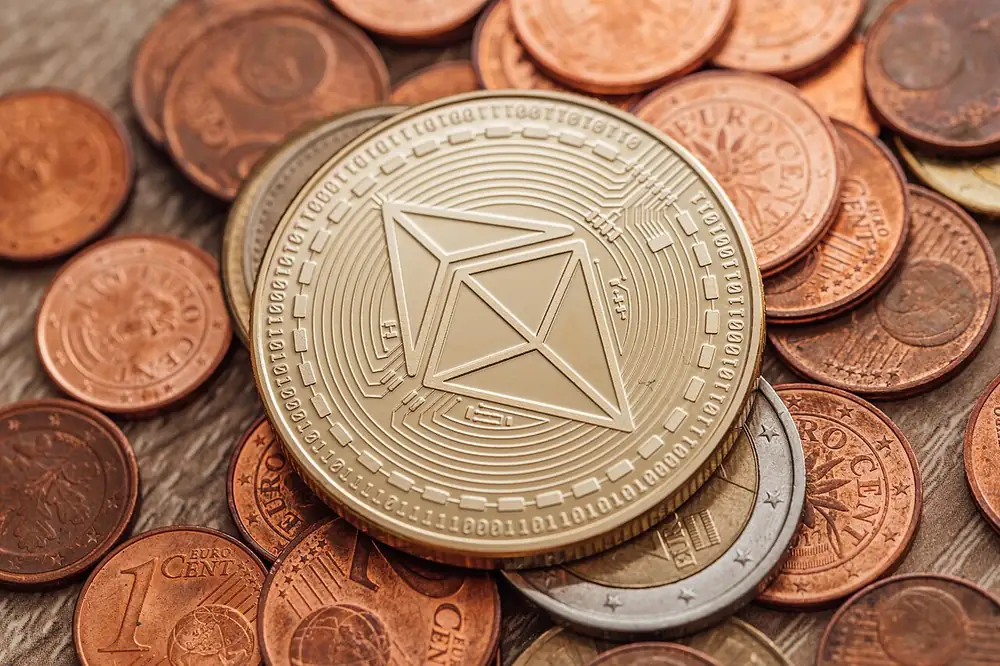
Chale, election season in Ghana is a full sport. The radio debates, the rallies, the polls everybody argues about, the uncle who is "very sure" who will win. So it's no surprise people want to bet crypto on election results, whether it's Ghana's next general election, the US race, or a big vote somewhere in Europe. Political markets do exist, and crypto has made some of them easy to reach. But they come with their own rules, their own risks and some honest legal questions. This guide walks you through how election betting works, how to read the odds, how crypto changes the picture, and the mistakes that cost people the most.
18+ only. General information, not betting, legal or financial advice. Betting in Ghana is regulated by the Gaming Commission of Ghana under the Gaming Act 2006 (Act 721). Cloudbet, which we link to, holds a Curaçao licence and is not licensed by the Gaming Commission of Ghana. Market availability changes, so check what any site actually lists. Free help: Mental Health Authority 0800 678 678; Gaming Commission 0800 454 545 or (027) 469 8935.

Two places you can bet crypto on an election
When people say they want to bet on an election with crypto, they usually mean one of two things, and they work quite differently.
1. Crypto sportsbooks with politics specials
Some crypto sportsbooks list election markets under a "Politics" or "Specials" tab, usually only for very big votes such as a US presidential election. The book sets the odds, includes its margin, and you're betting against the house exactly like on a football match. Whether a politics market is listed at any moment depends entirely on the operator, so check its specials section rather than assuming.
2. Prediction markets
Prediction markets let users trade "yes" and "no" shares on an outcome with each other. A share pays a fixed amount, often one dollar or one stablecoin, if the outcome happens and nothing if it doesn't. The current share price, say 62 cents, reflects what the crowd collectively thinks the chance is. Some of the best-known crypto prediction markets settle in a dollar stablecoin such as USDC. These platforms have their own country restrictions and terms, and some don't accept users from certain regions, so read them before you go anywhere near a deposit.
| Feature | Sportsbook politics special | Prediction market |
|---|---|---|
| Who you bet against | The bookmaker | Other users |
| How price is set | Bookmaker's odds plus margin | Supply and demand for shares |
| Can you exit early? | Sometimes, via cash out | Usually, by selling your shares |
| Costs | Built-in margin | Spread between buy and sell prices, sometimes fees |
| Market range | Mostly headline winners | Can include many smaller questions |
Reading election odds as probabilities
The single most useful skill here is turning odds into a percentage. With decimal odds, divide 100 by the price. Here's an illustrative two-candidate market:
| Candidate | Decimal odds (example) | Implied chance |
|---|---|---|
| Candidate A | 1.55 | 64.5% |
| Candidate B | 2.40 | 41.7% |
| Total | 106.2% |
The total is above 100% because of the margin, about 6% in this example. To bet sensibly, you need to believe a candidate's real chance is higher than the implied number. If you think Candidate B is a genuine 50/50, then 2.40 looks generous. If you think B is closer to 35%, it's a poor price even though B "could win". You can check any market's margin with our odds calculator.
On a prediction market, the maths is even simpler: a "yes" share at 0.38 USDC implies roughly a 38% chance. If you buy at 0.38 and the outcome happens, the share pays 1.00, a profit of 0.62 per share before any fees.
A worked USDT example
Say you have 100 USDT set aside for an election bet. You think Candidate B's real chance is about 50%, and the book offers 2.40.
- If B wins: 100 × 2.40 = 240 USDT returned, a 140 USDT profit.
- If B loses: you lose the 100 USDT.
- Expected value at your 50% estimate: (0.50 × 140) − (0.50 × 100) = +20 USDT.
- At a more realistic 40%: (0.40 × 140) − (0.60 × 100) = −4 USDT.
See how much the result depends on your estimate? That's the whole game. Election betting rewards people whose probability estimates are better than the market's, and punishes people who confuse hope, loyalty or social media noise with probability.
Why your gut is the worst analyst
Political bets are personal in a way football bets often aren't. A few traps catch almost everyone:
- Loyalty bias. Backing your party with money because you want them to win. If you can't imagine betting against your own side at a good price, you probably shouldn't bet on that election at all.
- Echo chambers. If every group chat you're in supports one candidate, it feels like the whole country does. It rarely is.
- Rally crowds. Big crowds are visible; quiet voters aren't. Crowd size is a weak signal.
- One poll. A single poll can be noisy or commissioned by one side. Look at many sources and at how they've performed before.
- Late "insider" tips. Messages claiming to know results early are usually rumours or scams.
Settlement: the rules that decide who gets paid
Football settles at the final whistle. Elections can be messier: recounts, court challenges, runoffs, delayed declarations. Before you bet, read exactly how the market settles.
- What counts as "winning"? The official declaration by the electoral body, the person sworn in, or a media projection? These can differ, especially when results are disputed.
- What happens in a runoff? In systems with a second round, a "winner" market might wait for the runoff or might settle on the first round. The rules matter.
- What if the vote is postponed? Some markets void, some carry over, some run until a deadline.
- Who decides disputes on a prediction market? Some crypto prediction markets use a resolution process that users can challenge. Read how it works, because a market can resolve in a way you think is wrong.
If the settlement rules aren't clear in writing, skip the market. Unclear rules are where long arguments and lost money live.
Thinking about Ghana's own elections
Ghana holds presidential and parliamentary elections every four years. The most recent was in December 2024, which John Mahama won, and the next is expected in December 2028. A few honest points for anyone thinking ahead:
- Market availability. International sites focus mostly on the biggest global elections. A Ghana market may be thin, appear late, or not appear at all.
- Thin markets move easily. On a small prediction market, a few large trades can push prices away from reality, which can create value but also traps.
- Local law and social risk. Ghanaian betting is licensed by the Gaming Commission, and offshore crypto sites like Cloudbet are not licensed by it. Political betting can also be sensitive; keep it private and never use it to pressure anyone.
- Peace first. No bet is worth arguments that turn ugly. Elections are about the country, not your slip.
How crypto changes the experience
Crypto makes funding fast, but it adds its own layers. If you're new to it, our guide to crypto betting on niche markets covers the plumbing in more detail. The key points for election bets:
- Use a stablecoin such as USDT or USDC for long-dated markets. An election market can sit open for months, and you don't want bitcoin's price swings stacked on top of the political risk.
- Check the network before you send. The wrong chain or address can mean lost funds that nobody can recover.
- Count every fee: exchange spread when you buy crypto, network fees in and out, and P2P rates when cashing back to cedis.
- Verification still applies. Many crypto sites ask for ID at certain deposit or withdrawal levels. Cloudbet's terms, for example, describe verification once cumulative deposits reach a set threshold. Plan for it.
- Money locked for months. Funds in an election bet are tied up until settlement. Only use money you won't need.
Long-dated bets and the cost of waiting
Election outright markets often open a year or more before the vote. Betting early can get a better price if your read is right, but your money is stuck the whole time. Compare that with what the same money could do elsewhere, even sitting safely in savings. A 20% profit after 18 months, with a real chance of losing everything, isn't as attractive as it sounds. On prediction markets you can usually sell early, but the price you get depends on how others see the race at that moment.
18+. Crypto deposits. Cloudbet is licensed in Curaçao, not by the Gaming Commission of Ghana. Ad: we may earn a commission. Bet only what you can afford to lose.
Hedging and cash out
If a market moves your way, you may be able to lock in a profit by cashing out on a sportsbook or selling shares on a prediction market. If it moves against you, cutting the loss is also an option. Both cost something, because you pay the margin or spread again. Use exits occasionally and on purpose, not every time the polls wobble.
Scams that spike in election season
- "Guaranteed result" groups selling leaked tallies or sure outcomes.
- Fake prediction-market apps that copy the look of a real site, take your crypto and vanish.
- "Account managers" who offer to place election bets for you if you send them crypto.
- Doubling schemes promising to double your USDT if your candidate wins.
The rule is simple: never send crypto to a person, only to a platform you've checked yourself, and never share your seed phrase with anyone. If you want help spotting fake withdrawal promises, see our guide to crypto withdrawal betting sites.
Election betting checklist
- Decide a fixed budget, for example 50 USDT, that you can afford to lose completely.
- Write down your own probability estimate before looking at the odds.
- Convert the odds to a percentage and compare.
- Read the settlement rules: declaration, runoff, postponement, disputes.
- Check the platform's country rules and verification thresholds.
- Use a stablecoin and double-check the network.
- Keep it private and keep it peaceful.
- Record the bet and the result, and review your estimate afterwards.
Polls vs markets: which should you trust?
People love to argue about whether betting markets "know better" than opinion polls. The fair answer is that they measure different things. A poll asks a sample of voters what they intend to do on a given day. A market price reflects what people with money at stake think will happen, which can include polls, history, turnout guesses and plenty of emotion. Markets react faster to news, but they can also overreact, and in thin markets a handful of big traders can move the price. Polls can miss quiet voters or late swings. Use both as inputs, never as gospel, and pay attention to how each has performed in that particular country before.
How the voting system shapes the market
Not every election works like a simple "most votes wins" race, and the system changes how you should read odds:
- Majority with runoff. In Ghana's presidential race a candidate needs more than half of the valid votes; if nobody gets there, the top two go to a second round. A first-round leader isn't automatically the favourite in a runoff market.
- Electoral colleges. In the US, the presidency is decided state by state, so national vote share and the final winner can differ. State-level markets often matter more than the headline number.
- Parliamentary systems. In many European countries the "winner" market may be about which party wins most seats, while the actual prime minister comes out of coalition talks weeks later.
Before you bet, make sure you understand the system well enough to explain it to a friend. If you can't, the market will probably understand it better than you, and that's exactly the edge you're paying for.
Side markets worth understanding
Beyond "who wins", political markets can include turnout ranges, vote-share bands, margin of victory, seat totals and whether a result is declared by a certain date. These are harder to price and often carry larger margins, because fewer people trade them. Treat them as small curiosity bets at most, and read the settlement source for each one, since vote-share and turnout figures can be revised after the first announcement.
Tax and records
Ghana removed the 10% withholding tax on betting winnings from 2 April 2025, but large or regular winnings can still matter for income tax. See our Ghana betting tax guide, and keep a note of every crypto deposit, withdrawal and result.
My take
Betting crypto on an election can be interesting if you treat it as a test of how well you read probability, with a small fixed budget and clear settlement rules. It goes wrong when loyalty replaces judgement, when money gets locked up that you'll need, or when a stranger on Telegram promises a sure result. Keep stakes small, keep politics peaceful, and if betting stops feeling like fun, use the free helplines above.
18+. Crypto deposits. Cloudbet is licensed in Curaçao, not by the Gaming Commission of Ghana. Ad: we may earn a commission. Bet only what you can afford to lose.
If betting is causing you stress or money trouble, help is free. The Mental Health Authority's toll-free line is 0800 678 678. For self-exclusion or complaints about a licensed operator, call the Gaming Commission of Ghana toll-free on 0800 454 545 (or 027 469 8935). Source: gamingcommission.gov.gh.