How to Bet on College Football from Ghana: Spreads, Totals, Conferences, Kick-Off Times in GMT and a Season Plan
Welcome bonus for new players + fast crypto payouts. Just helping a brother out.
18+. Crypto deposits. Cloudbet is licensed in Curaçao, not by the Gaming Commission of Ghana. Ad: we may earn a commission. Bet only what you can afford to lose.
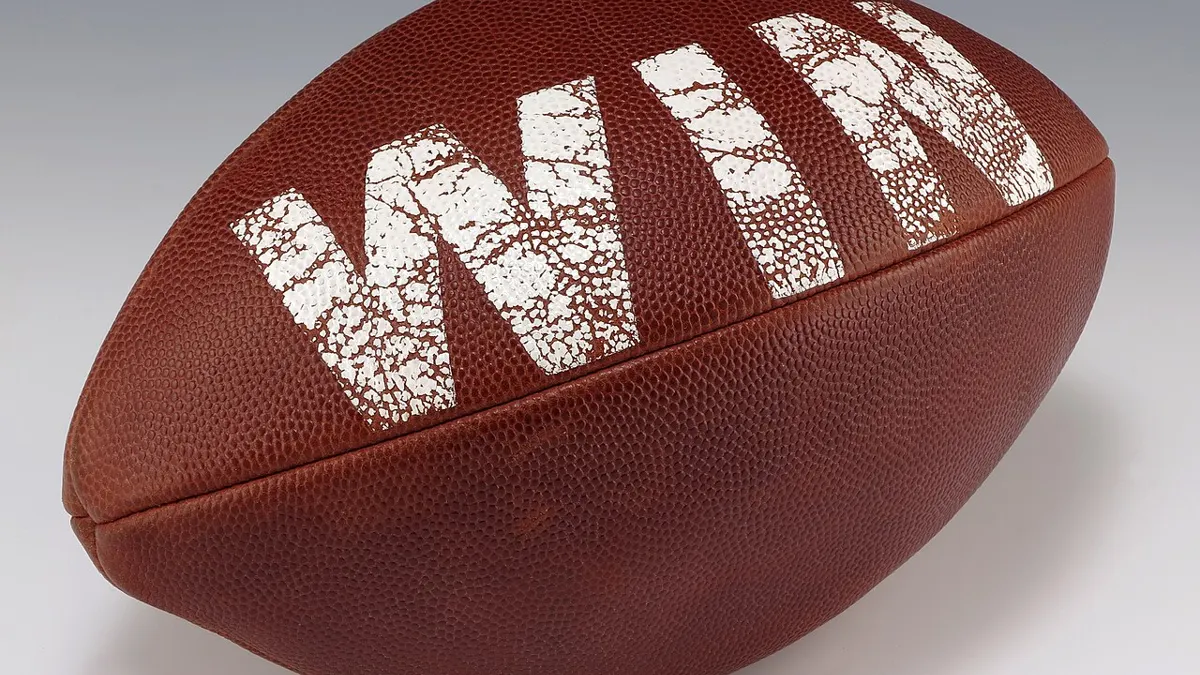
American college football is a strange thing to bet on from Accra. It is played by university teams, it has well over a hundred top-level sides, the scores are odd numbers like 31-24, and the spreads can be forty points wide. But that is exactly why some bettors love it: there are so many games every Saturday that the bookmakers cannot price all of them perfectly. If you are curious about how to bet on college football, this guide starts from zero, explains the sport just enough to bet on it, walks you through every main market, and finishes with a realistic season plan in cedis.
18+ only. Nothing here is a tip or a promise of profit. Cloudbet, the crypto sportsbook we link to, is licensed in Curaçao and is not licensed by the Gaming Commission of Ghana. Read our guide to betting legality in Ghana before you open any account.
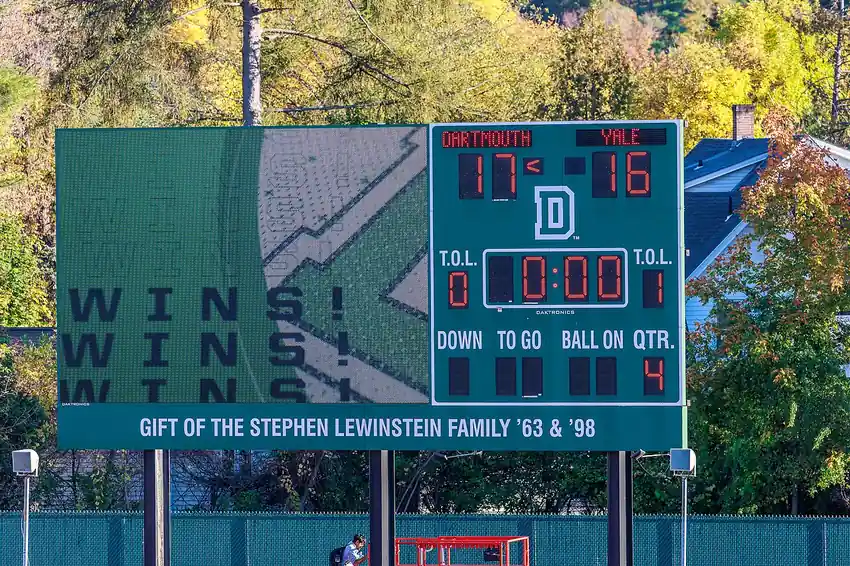
American football in two minutes
If you grew up on football with a round ball, here is the shortest possible explanation of the American game. Two teams of eleven take turns attacking. The attacking team has four attempts, called downs, to move the ball ten yards. Gain ten yards and you get a fresh set of four downs. Fail and the ball usually goes to the other side, often after a deliberate kick (a punt) on fourth down.
Points come from:
- Touchdown: 6 points, carrying or catching the ball in the end zone.
- Extra point after a touchdown: 1 point for a short kick, or 2 points for a play from close to the line.
- Field goal: 3 points, kicking the ball through the posts.
- Safety: 2 points for the defence, tackling the attacker in his own end zone.
That scoring system is why 3 and 7 are the most common winning margins, a fact we will come back to because it matters for every spread bet you make. A game has four quarters of 15 minutes of game clock, but with stoppages a broadcast usually runs well over three hours.
What makes college football different from the NFL
The NFL is the professional league with 32 teams. College football is played by university teams, and the top level, the Football Bowl Subdivision (FBS), has well over 130 programmes. That changes betting in several ways:
- Huge gaps in quality. A powerhouse can play a small school and be favoured by 30 or 40 points. In the NFL, double-digit spreads are rare.
- Young players and rosters that change every year. Players stay only a few seasons. The transfer portal and name-image-likeness (NIL) deals mean rosters can change a lot between seasons, so last year's form is a weaker guide.
- Home crowds that matter. Some stadiums hold over 100,000 fans, and student-age players can struggle in hostile, loud venues.
- Many more games. A busy Saturday can have more than 50 FBS games. Bookmakers price them all, but they cannot give each one the attention they give an NFL game, especially the small-conference ones.
- Different overtime rules. College overtime gives each team a possession from the opponent's 25-yard line, and in later overtimes teams alternate two-point attempts. That makes long overtimes and late points more likely than in the NFL, which matters for totals bets (overtime usually counts).
The college football calendar
| Period | What happens | Betting notes |
|---|---|---|
| Late August to early September | Season openers, many big-vs-small mismatches | Lines rely heavily on preseason ratings; roster news matters most |
| September to November | Conference schedules | Ratings settle; rivalry games and travel spots appear |
| Late November | Rivalry week | Emotion, form books often thrown out |
| Early December | Conference championship games | Neutral sites, playoff places on the line |
| December to January | Bowl games and the College Football Playoff | Player opt-outs, coaching changes, long layoffs |
The playoff expanded to 12 teams from the 2024-25 season, with first-round games played on campus and later rounds at bowl sites, ending with the national championship game in January. The seeding rules have already been tweaked once since the expansion, so check the current format at the start of each season rather than trusting an old article.
Kick-off times in Ghana
Ghana stays on GMT all year. Most college football games are played in the US Eastern and Central time zones, and the US moves its clocks back an hour in early November. As a rough guide for typical Saturday slots in US Eastern Time:
| US Eastern slot | Ghana time until early November | Ghana time after clocks change |
|---|---|---|
| 12:00 noon | 4:00 PM | 5:00 PM |
| 3:30 PM | 7:30 PM | 8:30 PM |
| 7:00 to 8:00 PM | 11:00 PM to midnight | Midnight to 1:00 AM |
| 10:30 PM (West Coast late games) | 2:30 AM Sunday | 3:30 AM Sunday |
That is friendly for Ghana: the early and afternoon slots fall in the late afternoon and evening. The late games are a different story. Placing bets at 2 AM after a long night of watching is a classic recipe for impulsive decisions. Set your bets for the late games before you start watching the early ones.
The main markets
Point spread
The spread is the most popular college football bet. The bookmaker gives the weaker team a head start. If a powerhouse, Team A, is -14.5 against Team B, Team A must win by 15 or more for a Team A bet to win. Team B +14.5 wins if Team B wins outright or loses by 14 or fewer. Spreads are usually priced around -110 on both sides, which is decimal 1.91. At that price you need to win about 52.4% of your bets just to break even, because the bookmaker's margin is built into the price.
A whole-number spread like -14 can push: if the favourite wins by exactly 14, stakes are returned. Half-point spreads such as -14.5 cannot push.
Moneyline
The moneyline is simply who wins. In college football, many moneylines are lopsided: a 21-point favourite might be priced at something like -2000 (decimal 1.05), paying almost nothing. Underdog moneylines on teams getting a few points can be interesting, because an outright upset pays a lot more than the spread. If American odds like -250 are new to you, our explainer on -250 odds walks you through the conversion.
Totals (over/under)
The total is combined points. A line of 58.5 means you bet on whether the two teams score 59 or more (over) or 58 or fewer (under). College totals vary hugely, from the low 40s for defensive, run-heavy matchups to the 70s for fast-paced passing teams. Overtime points normally count toward the total.
First half, quarters and team totals
Many books offer spreads and totals for just the first half or each quarter, plus each team's own points total. These are useful when you have an opinion about how a game will start, for example a team that scripts its first drives well, or one that tends to fade late.
Futures
You can bet on who wins the national championship, a conference, or the Heisman Trophy (the award for the best player) months in advance. Futures tie up your money for a long time and carry big margins. They are fun in small doses but not where most of your betting money should go.
Player props
Props such as a quarterback's passing yards or a running back's rushing yards are available on bigger games. They are often priced less sharply than the main lines, but limits are lower and information about who will actually play can be patchy. College teams are not always required to publish detailed injury information in the way the NFL does, though reporting rules have been tightened in recent seasons in some conferences. Do not assume a star is playing just because he played last week.
Key numbers: why 3 and 7 matter
Because touchdowns plus extra points make 7 and field goals make 3, final margins cluster around 3, 7, 10, 14 and 17. In college football, the clustering is weaker than in the NFL because blowouts are common and scoring is more varied, but 3 and 7 still stand out. Practical consequences:
- Getting +7.5 instead of +6.5 is worth more than getting +5.5 instead of +4.5, because more games land exactly on 7 than on 5.
- If you like a favourite at -3 and the line moves to -3.5, the half point you are giving up is expensive. Many sharp bettors would rather pass than lay -3.5 when they wanted -3.
- "Buying" a half point (paying a worse price to move the spread) is usually only worth it across 3 or 7, and even then only sometimes.
How bookmakers set college lines (and where they slip)
Bookmakers start from power ratings: a number for each team estimating how strong it is against an average opponent. The spread is roughly the difference in ratings plus home-field advantage, often estimated somewhere around 2.5 to 3 points on average, though it varies by stadium. Then the line moves as money comes in.
Places where college lines are more likely to be soft:
- Early season, when ratings are built on last year and on guesses about returning players and transfers.
- Small conferences (often called "Group of Five" leagues), where fewer people bet and bookmakers spend less time on each game. The flip side is lower limits, and the lines still move fast once the market finds them.
- Weather games, especially strong wind, which hurts passing and kicking more than rain does.
- Quarterback changes. In college, the backup quarterback can be dramatically worse, or a lot better, than the starter.
- Bowl games, when players skip the game to prepare for the NFL draft, coaches leave for other jobs, and motivation varies.
Do not expect to beat the big, well-known games on Saturday night by looking at the TV pundits. Those are the most efficient lines on the board.
Situational spots worth knowing
- Look-ahead games: a strong team playing a weak opponent the week before a huge rivalry game may not be fully focused. This is a well-worn idea, so do not overrate it, but it is real enough to check.
- Letdown after a big win: a team that just beat a rival might come out flat the next week.
- Travel: long trips across time zones, especially West Coast teams playing early kick-offs in the East, are often discussed. Evidence is mixed; use it as a tie-breaker, not a reason.
- Altitude: a handful of programmes play at high altitude, and visiting teams can struggle with conditioning late in games.
- Short weeks: teams playing a Thursday or Friday game after a Saturday game have less time to prepare.
A simple way to make your own line
You do not need a computer model to start. Here is a rough process for one game:
- Look up a respected public power rating for both teams (several are published free online). Note the difference.
- Add home-field advantage, around 2.5 to 3 points as a starting estimate, more for famously loud venues, less for half-empty stadiums.
- Adjust for news the rating may not know: a starting quarterback injured, a key defender suspended, extreme weather.
- Compare your number with the bookmaker's spread. If your line and theirs are within a point or two, pass. Only bet when the gap is meaningful and you can explain why.
Example (illustrative, not a real game): ratings say Team A is 10 points better than Team B on a neutral field. Team A is at home, so you add 3, giving A -13. You learn Team B's starting quarterback is out, which you judge to be worth about 4 points, so your line is A -17. The bookmaker shows A -13.5. You think A -13.5 is too low. That gap, not your love of Team A, is the reason to bet.
Bankroll maths: what a season really looks like
Suppose you bet three games every Saturday for twelve weeks, GH₵50 each at -110 (1.91). That is 36 bets and GH₵1,800 staked. Here is the average result, the expected value, at different win rates:
| Your true win rate | Average result per bet | Average for the season (36 bets) |
|---|---|---|
| 50% (coin flip) | about −GH₵2.27 | about −GH₵82 |
| 52.4% (break-even) | about GH₵0 | about GH₵0 |
| 55% (very good) | about +GH₵2.50 | about +GH₵90 |
Two lessons. First, even a very good bettor makes a modest amount on modest stakes. Second, luck dominates small samples. Over 100 bets, a bettor whose true skill is exactly break-even will still show a 55% or better record about one season in three. And a genuinely good 55% bettor will be at 50% or worse after 100 bets nearly one time in five. Do not judge yourself, or any tipster, on one season.
18+. Crypto deposits. Cloudbet is licensed in Curaçao, not by the Gaming Commission of Ghana. Ad: we may earn a commission. Bet only what you can afford to lose.
Parlays and teasers
College football is a parlay favourite: three spreads at -110 pay about 6.96 in decimal (roughly +596), against fair odds of 8.00 if each leg were a true 50-50. That gap is the margin compounding. Parlays are fine for small fun stakes; they are an expensive way to bet seriously.
Teasers let you move the spread in your favour, for example 6 points on each leg, in exchange for a lower payout. A two-team, six-point teaser priced at -120 needs each leg to win about 73.9% of the time to break even. In the NFL, teasers that move a line across both 3 and 7 have historically been popular; in college football, margins are spread more widely, so the same teaser usually captures fewer outcomes. Be sceptical of teaser "systems" borrowed from NFL betting.
Conferences and why they matter for betting
College teams are grouped into conferences, and most of the season is played inside them. The biggest and richest conferences, usually called the "Power" conferences, have the deepest rosters, the most TV coverage and the most betting money. Conference membership has been reshuffled heavily in recent years, with several big programmes switching leagues, so a team's schedule this season may look nothing like the one from three years ago. Check the current line-up each August.
Why it matters to you as a bettor:
- Familiarity. Teams in the same conference play each other regularly, coaches know each other's schemes, and these games tend to be closer than raw talent suggests.
- Non-conference games early in the season often pit a big programme against a much smaller school that is paid to visit. Spreads in these games can be enormous, and the favourite's starters may sit for the second half once the game is decided.
- Conference strength is hard to measure early. Until teams from different conferences have played each other, the ratings for whole leagues are partly guesswork. That is part of why early-season lines are softer.
- Championship games in early December are on neutral fields, so the usual home-field adjustment disappears.
Bowl season: a different kind of betting
Bowl games run from mid-December into January and include dozens of games, from small bowls between mid-table teams to the playoff matchups. They are fun to bet, but the factors change completely compared with the regular season:
- Long layoffs. Teams may not have played for three or four weeks. Rust, rest and injuries healed all come into play.
- Opt-outs. Star players heading to the NFL draft sometimes skip non-playoff bowls. News of an opt-out can arrive late and move the line by several points.
- Coaching changes. If a head coach has left for another job, an interim coach may lead the team. Assistants also move around in December.
- Transfer portal timing. Players who have entered the portal may not travel with the team.
- Motivation. One team may be thrilled to be there, the other disappointed to miss the playoff. This is hard to measure, so be wary of anyone who claims to know.
The practical rule for bowls: wait for news before betting if you can, and size your stakes smaller than in the regular season because the uncertainty is bigger.
Reading a sample college football bet slip
Here is how a typical game might appear on an international sportsbook, using illustrative numbers only:
| Market | Team A (home) | Team B (away) |
|---|---|---|
| Spread | -6.5 at -110 (1.91) | +6.5 at -110 (1.91) |
| Moneyline | -240 (1.42) | +195 (2.95) |
| Total | Over 54.5 at -110 | Under 54.5 at -110 |
Reading it: Team A must win by 7 or more to cover; Team B covers if it loses by 6 or fewer or wins. If you think Team B has a real chance to win outright, the moneyline at 2.95 pays far more than the spread, but you get nothing for a narrow loss. If you expect a high-scoring game, the over needs 55 combined points. A GH₵40 bet on Team B +6.5 returns about GH₵76.36 if it covers.
Live betting on college games
College football swings: big leads disappear, turnovers come in bunches, and young players panic. That creates live betting opportunities, but also traps. Points to remember:
- The live price already reflects the score, the time left and who has the ball. A team down 17-0 at half is not "due" a comeback.
- Streams can lag behind the live data the bookmaker uses. Never try to bet on what you think you just saw.
- Timeouts and the end of each quarter are when prices are most stable; during a drive they can be suspended.
- Late-night games plus live betting plus fatigue is a bad mix. Decide in advance how many live bets you allow yourself.
Our guide to live odds explains in-play pricing in more detail.
Where to find information
- Team news and depth charts from local US newspapers and team beat reporters often appear before national outlets pick them up.
- Weather forecasts for the stadium city on game day. Wind above about 15 to 20 miles per hour is worth noticing for totals.
- Advanced stats such as yards per play, success rate and turnover margin. Turnover luck, like fumbles bouncing one way, tends not to repeat, so a team with a big turnover margin may be weaker than its record.
- Line movement: if the line moves against the public favourite, it can hint that bigger, more informed bettors are on the other side. Treat this as a clue, not a rule.
Betting college football with crypto from Ghana
Most Ghana-licensed bookmakers focus on football with a round ball and offer limited American football markets, if any. International sportsbooks, including crypto books such as Cloudbet, typically list a full college football board with spreads, totals and props. A few practical points:
- Your stake and winnings are in crypto or a stablecoin such as USDT. The cedi value of a Bitcoin balance can move while your bet is open; a stablecoin removes most of that worry.
- Deposits and withdrawals involve network fees and exchange spreads. On small stakes, those costs can be bigger than the bookmaker's margin, so move money in larger, less frequent amounts.
- Check that the book's display matches what you expect: some show American odds by default. You can usually switch to decimal in settings.
- Offshore books are not regulated in Ghana, so disputes go through the operator and its licensing authority, not the Gaming Commission. Read our guide to betting on sports with crypto for the full picture.
A beginner's weekly routine
- Tuesday or Wednesday: look at opening lines for the coming Saturday. Shortlist five or six games where you have some opinion.
- Thursday: check injury and depth-chart news for those games. Drop any where the news makes you unsure.
- Friday: check the weather forecast and the current lines. Make your own line for each remaining game.
- Saturday morning (Ghana time): bet only the two or three games where your number is clearly different from the market, at a flat stake such as 1% to 2% of your betting money.
- Sunday: record every bet, the line you got, the closing line and the result. Over time, consistently getting better numbers than the closing line is a better sign of skill than your win-loss record.
Mistakes Ghanaian bettors often make with college football
- Betting famous names. Big programmes attract public money, and their lines are often shaded against fans.
- Treating huge spreads as free money. A 35-point favourite can win by 31, take its starters off in the third quarter, and lose your bet.
- Ignoring the half point around 3 and 7.
- Using NFL knowledge directly. The college game is played differently: different overtime, different clock rules in places, wider talent gaps.
- Chasing on the late games. If the afternoon went badly, the 2 AM West Coast game is not the place to win it back. Our article on doubling-up systems explains why.
- Over-trusting tipsters with screenshots of winning slips. Ask for a full record including the losses and the lines they got.
Glossary
- ATS: against the spread, a team's record when the spread is applied.
- Chalk: the favourite.
- Cover: win the bet against the spread.
- Hook: the half point, as in "-3 with the hook" for -3.5.
- Juice / vig: the bookmaker's margin, usually shown in the -110 price.
- Push: a tie against the spread or total; stakes are returned.
- Steam: a sudden line move across many books, usually from heavy betting.
- Opt-out: a player choosing not to play a bowl game, often to prepare for the NFL draft.
My take
College football rewards patience and homework more than passion. Learn the scoring and the key numbers, bet spreads and totals rather than long parlays, focus on a few games where you have a genuine edge in information or price, and keep your stakes flat. It can be a fun Saturday hobby that fits Ghana's evening hours nicely, as long as it stays a hobby. If it stops being fun, call the Mental Health Authority helpline on 0800 678 678 (toll-free), or the Gaming Commission of Ghana's toll-free line on 0800 454 545, or read our responsible gambling page.
Questions punters ask
How do you bet on college football?
Pick a market, usually the point spread, moneyline or total, choose your side and stake, and place the bet before kick-off or live. Spreads at -110 need about a 52.4% win rate to break even.
What does +14.5 mean in college football?
The underdog gets 14.5 points added to its score. It wins the bet if it wins outright or loses by 14 or fewer.
What time are college football games in Ghana?
Typical Saturday slots run from about 4 PM to 3 AM Ghana time, one hour later after US clocks change in early November.
Does overtime count in college football bets?
On most books, yes: spreads, moneylines and totals include overtime unless the market says otherwise. Check the rules of the site you use.
Can I bet on college football from Ghana?
Local Ghanaian books often have limited American football markets. International and crypto books such as Cloudbet list full boards, but they are not licensed by the Gaming Commission of Ghana.
Where can I get help with gambling in Ghana?
Call the Mental Health Authority helpline on 0800 678 678 (toll-free), or the Gaming Commission of Ghana's toll-free line on 0800 454 545.
18+. Crypto deposits. Cloudbet is licensed in Curaçao, not by the Gaming Commission of Ghana. Ad: we may earn a commission. Bet only what you can afford to lose.
If betting is causing you stress or money trouble, help is free. The Mental Health Authority's toll-free line is 0800 678 678. For self-exclusion or complaints about a licensed operator, call the Gaming Commission of Ghana toll-free on 0800 454 545 (or 027 469 8935). Source: gamingcommission.gov.gh.