How to Bet on a Jockey Challenge (the Market Sportsbet Made Famous): Points, Rides, Dead Heats and Value, Explained for Ghana
Welcome bonus for new players + fast crypto payouts. Just helping a brother out.
18+. Crypto deposits. Cloudbet is licensed in Curaçao, not by the Gaming Commission of Ghana. Ad: we may earn a commission. Bet only what you can afford to lose.
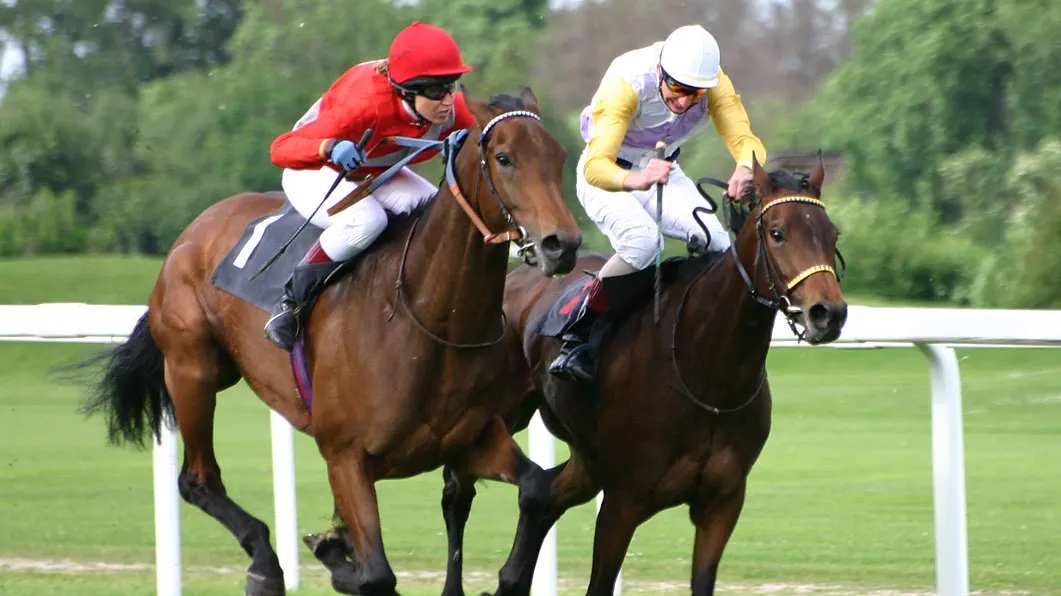
My brother, if you have ever scrolled an Australian racing card and seen a market called "Jockey Challenge", you have probably wondered how it works. Sportsbet and other Australian bookmakers made it popular: instead of picking one horse in one race, you pick which jockey will score the most points across a whole race meeting. It sounds simple, but the maths behind it is different from a normal win bet, and that is where punters either find value or quietly bleed money. This page walks you through it step by step, with cedi examples.
18+ only. General information, not betting advice, and not a how-to for any particular bookmaker's app. Gambling in Ghana is regulated by the Gaming Commission of Ghana under the Gaming Act 2006 (Act 721). Sportsbet is an Australian operator and is not a Ghana-facing site. Cloudbet, which we link to, holds a Curaçao licence and is not licensed by the Gaming Commission of Ghana, and not every bookmaker (Cloudbet included) lists jockey challenge markets on every meeting. Free help: Mental Health Authority 0800 678 678; Gaming Commission 0800 454 545 or (027) 469 8935.
What a jockey challenge actually is
A jockey challenge is a market on which jockey collects the most points at one race meeting. A meeting is the full card at one track on one day, often eight to ten races. Each jockey gets points for every ride that finishes in the top three, the points are added up after the last race, and the jockey with the highest total wins the challenge. You are not betting on a horse at all. You are betting on a person and all of their rides for the day.
The market usually opens before the first race and lists the jockeys with the most or best rides at that meeting, plus an "Any other jockey" or "Field" option at a bigger price. Prices then move as rides are confirmed, horses are scratched and results come in.
The standard points system
Most Australian-style jockey challenges use a simple scale. Always confirm the exact rules on the market you bet, because they are not identical everywhere.
| Finish | Typical points | Notes |
|---|---|---|
| 1st | 3 | The big one: one winner is worth three thirds |
| 2nd | 2 | Placings add up fast on a busy day |
| 3rd | 1 | Small, but often decides a close challenge |
| 4th or worse | 0 | Nothing, no matter how close |
Some operators use other scales. Hong Kong-style jockey challenges, for example, have used a larger points scale for first, second and third. The idea is the same, but the ratio between a win and a placing changes, and that changes how much you should value a jockey with lots of placed chances versus one with a couple of strong favourites. Read the scale first, then do your thinking.
When two horses dead-heat for a position, the points for those positions are usually shared. Two jockeys dead-heating for first on a 3-2-1 scale would typically each get 2.5 points (3 plus 2, divided by two). Again, check the house rules.
Why ride count matters as much as talent
Here is the thing that catches new punters: the best jockey in the country is not automatically the favourite. A jockey with seven decent rides can beat a champion who has only three. Every extra ride is another lottery ticket for points. So when you look at a challenge, the first questions are:
- How many rides does each jockey have? Count them race by race.
- How good are those rides? A ride at 3.00 is worth far more than a ride at 26.00.
- Are any rides doubtful? Horses can be scratched, and jockeys can be replaced because of injury, suspension or a change of plan.
- Are rides spread across the card? A jockey with rides in the last three races keeps the challenge alive late, which matters if you are watching live prices.
How to estimate a jockey's expected points
You don't need a supercomputer. You can get a rough expected points figure from the win odds of each ride. The method:
- Turn each ride's decimal win odds into an implied chance: 1 divided by the odds. A horse at 4.00 is 25%.
- Knock off some bookmaker margin. A racing market often adds up to well over 100%; if a race totals about 115%, divide each chance by 1.15.
- Estimate the chance of second and third. For a quick illustration, we'll assume a horse's chance of running second is about 0.9 times its win chance and its chance of running third is about 0.85 times its win chance. Real numbers vary with field size and price, so treat this as a rough rule, not a law.
- Expected points per ride ≈ 3 × P(win) + 2 × P(2nd) + 1 × P(3rd). With the rule above, that's about 5.65 × P(win).
- Add up all of a jockey's rides.
Let's do three fictional jockeys at a fictional nine-race meeting. All chances are illustrative and already have margin removed.
| Jockey | Rides | Win chances per ride | Sum of win chances | Expected points (≈ 5.65 × sum) |
|---|---|---|---|---|
| Jockey A (busy) | 6 | 30%, 18%, 11%, 23%, 7%, 15% | 1.04 | ≈ 5.9 |
| Jockey B (quality) | 4 | 40%, 25%, 30%, 20% | 1.15 | ≈ 6.5 |
| Jockey C (volume, weaker rides) | 7 | 12%, 9%, 14%, 10%, 15%, 8%, 12% | 0.80 | ≈ 4.5 |
Notice what happened. Jockey C has the most rides but the weakest book, so the lowest expected points. Jockey B has the fewest rides but the strongest ones, so he edges it. Jockey A sits in between. That's the whole game in one table: quantity times quality.
Expected points is not the same as chance of winning
A jockey with the highest expected points is the most likely winner, but not by as much as you might think. Points are lumpy. One winner is three points, so a single 10.00 shot saluting can flip the whole challenge. Jockeys with more rides have smoother, more predictable totals; jockeys with fewer, stronger rides are more all-or-nothing.
So in our example, even though Jockey B has the top expected points, his chance of actually winning the challenge might be somewhere around 30% to 35%, with A not far behind and C plus "any other" taking the rest. If you wanted to be precise, you would simulate the meeting thousands of times in a spreadsheet using each horse's chances. For most punters, the rough method plus common sense gets you close enough to spot a price that looks badly wrong.
Turning your estimate into a value decision
Once you have a rough chance, compare it with the price. Fair odds are 1 divided by your chance.
| Your estimated chance | Fair decimal odds | If offered | Expected result per GH₵100 staked |
|---|---|---|---|
| 30% | 3.33 | 3.75 | 0.30 × 375 − 100 = +GH₵12.50 |
| 30% | 3.33 | 3.00 | 0.30 × 300 − 100 = −GH₵10.00 |
| 20% | 5.00 | 6.00 | 0.20 × 600 − 100 = +GH₵20.00 |
| 10% | 10.00 | 8.00 | 0.10 × 800 − 100 = −GH₵20.00 |
The positive numbers are only "value" if your estimate is honest. It's easy to fool yourself into thinking every price is generous. Keep a simple record of your estimates and the results; after 30 or 40 challenges you'll see whether your numbers are any good.
Dead heats in the challenge itself
What happens when two jockeys finish the meeting level on points? On most markets, dead-heat rules apply: your stake is divided by the number of jockeys tied, and you are paid at full odds on that portion. Some operators use a countback instead, such as most wins, so check.
Worked example: you put GH₵50 on a jockey at 4.00. He ties with one other jockey.
- Outright win would have returned 50 × 4.00 = GH₵200 (GH₵150 profit).
- Dead heat with one other: stake becomes GH₵25, return 25 × 4.00 = GH₵100 (GH₵50 profit).
- Dead heat with two others: stake becomes about GH₵16.67, return ≈ GH₵66.67 (≈ GH₵16.67 profit).
On a low-scoring day at a small meeting, ties are more common than you think, so factor that in when you take a short price.
Scratchings, replacement rides and abandoned meetings
Rules here vary a lot between bookmakers, and this is where disputes come from. Things to look for in the terms before you bet:
- Scratched horses. If one of your jockey's horses is scratched, the ride is simply lost. Your bet usually stands, but your jockey now has fewer chances.
- Jockey replaced. If your jockey is injured or stood down mid-meeting, many markets settle on the points he scored before stopping, and the bet stands. A few may void bets on a non-starting jockey.
- Extra rides picked up. When another rider is injured, his rides get handed out. Points from new rides normally count for whoever rides them.
- Abandoned or shortened meetings. If weather or track problems stop the meeting, bets may be settled on races completed, or voided if too few races were run. Check the minimum.
- Protests and stewards' changes. Most markets settle on the official placings at the time of the "all clear" or correct weight. Later appeals don't usually change payouts.
Read these rules once per bookmaker and keep a note. Five minutes now saves an argument with support later.
When jockey challenge betting makes sense
- Big jockey bookings at a small meeting. When a top rider travels to a country or provincial track with a full book, he can dominate the points. The market often prices this correctly, but not always.
- Track and distance specialists. Some jockeys ride a particular track much better than their overall record suggests.
- Stable connections. A jockey riding most of a strong stable's runners on the day has a ready-made run of chances.
- Late scratchings that haven't moved the price yet. If a rival loses two of his best rides, his expected points fall, and the other jockeys' chances rise.
18+. Crypto deposits. Cloudbet is licensed in Curaçao, not by the Gaming Commission of Ghana. Ad: we may earn a commission. Bet only what you can afford to lose.
When to leave it alone
- When you haven't counted the rides. Betting on a famous name without checking his book is just guessing.
- When the "any other" price is short. At big meetings with lots of strong riders, the field can be the real danger.
- When the margin is huge. Add up 1 ÷ odds for every option in the market. If it totals 130% or more, you're paying a lot for the privilege.
- When you're chasing. A jockey challenge runs for several hours. If you lost on the early races, don't double up on the challenge to "get it back".
Live jockey challenge betting
Some bookmakers keep the challenge open between races. The price after each race tells you how the points table has changed and how many rides each jockey has left. Here's a simple check you can do yourself:
- Write down each jockey's current points.
- Write down their remaining rides and rough win chances.
- Add the expected points still to come (5.65 × sum of remaining win chances, using our rough rule).
- Projected total = current points + expected remaining points.
Example: after race five, Jockey A has 5 points with two rides left (25% and 15%). Expected remaining ≈ 5.65 × 0.40 ≈ 2.3, so projected ≈ 7.3. Jockey B has 3 points with three rides left (35%, 30%, 20%). Expected remaining ≈ 5.65 × 0.85 ≈ 4.8, so projected ≈ 7.8. B is behind on the board but ahead on projection. If the market has A as a clear favourite, B could be the value. If both are priced about even, there's no edge either way.
Race times from Ghana
Ghana runs on GMT all year, which means jockey challenges on overseas meetings happen at very different times of day for you:
| Racing region | Time difference to Ghana | What that usually means |
|---|---|---|
| Australia (east coast) | About 10 to 11 hours ahead, depending on daylight saving | Afternoon meetings there run in the early hours of the morning in Ghana |
| Hong Kong | 8 hours ahead | Afternoon racing there is early morning here; evening racing there runs around late morning to midday here |
| South Africa | 2 hours ahead | Afternoon meetings fit a Ghanaian late morning or afternoon |
| United Kingdom and Ireland | Same time in winter, 1 hour ahead in summer | Easiest to follow live |
If a market opens while you're asleep, don't set an alarm to bet at 3 AM on a half-checked card. Either do your homework the evening before or skip that meeting.
Related markets worth knowing
- Trainer challenge: same idea, but points go to the trainer of each horse. Big stables with many runners tend to dominate.
- Jockey head-to-head: two jockeys, who scores more points. Fewer outcomes, often lower margins.
- Jockey over/under points: a line such as 6.5 points for a named jockey. Our expected-points method is very handy here.
- Jockey to ride a winner / number of winners: simpler props based on wins only.
Not every bookmaker offers these, and availability changes by meeting.
A five-step routine before you bet
- Confirm the points scale, dead-heat rule and scratching rule for this market.
- List every jockey's rides and rough win chances, with margin removed.
- Estimate expected points and adjust for lumpiness: fewer rides means a wider range of outcomes.
- Compare your chance with the price; only bet when the gap is clear.
- Stake small. A jockey challenge is one result after many races, so it ties your money up for hours.
Common mistakes
- Backing the "best jockey" without counting rides.
- Ignoring the scale. A 3-2-1 scale and a scale that rewards wins much more heavily can produce different favourites.
- Forgetting scratchings. Check the card again close to the first race.
- Not reading the dead-heat or abandonment rules.
- Treating a jockey challenge like a safe "banker" in an accumulator. It's a single, volatile result.
Learn the basics first
If horse racing is new to you, start with our guide on how to bet on a horse race, which covers odds formats, forecasts and settlement. For big-race planning, see how to bet on the Durban July and Japanese horse racing online. Prefer crypto? Our page on crypto horse betting explains deposits and pricing. And our odds calculator converts prices and implied chances in seconds.
Know the law and keep it fun
In Ghana, betting is legal through operators licensed by the Gaming Commission under Act 721; see our page on whether betting is legal in Ghana. Offshore sites like Cloudbet are not licensed locally, so you don't get the Gaming Commission's protection if something goes wrong. Winnings are no longer hit with the old 10% withholding tax (removed from 2 April 2025), but GRA guidance is that winnings can still be reportable in your annual income tax. Set a budget for the whole meeting before the first race and stick to it. If betting is affecting your money, sleep or family, call the Mental Health Authority on 0800 678 678 or the Gaming Commission on 0800 454 545, and visit our responsible gambling page.
My take
A jockey challenge is a fun way to have an interest in a whole race card instead of one race. The edge, when there is one, comes from doing the boring work: counting rides, turning odds into chances, and checking the rules on dead heats and scratchings. My brother, if you do that homework, you'll pass on most challenges and only bet the ones where the price clearly looks wrong. That's exactly how it should be.
Questions punters ask
How does a jockey challenge work?
You bet on which jockey will score the most points at one race meeting. On the common Australian scale, a jockey gets 3 points for a win, 2 for second and 1 for third on each ride, and the highest total after the last race wins.
What happens if two jockeys tie in a jockey challenge?
Most bookmakers apply dead-heat rules: your stake is divided by the number of tied jockeys and paid at full odds on that portion. Some use a countback such as most wins instead, so check the market rules.
Does a scratched horse void my jockey challenge bet?
Usually not. The ride is simply lost and the bet stands on the jockey's remaining rides. Rules for injured or replaced jockeys and abandoned meetings vary by bookmaker.
Can I bet on jockey challenges from Ghana?
Some international bookmakers list jockey challenges on Australian, Hong Kong and other meetings, but not all do, and offshore sites are not licensed by the Gaming Commission of Ghana. Check availability and terms before you deposit.
Is the best jockey always the favourite?
No. The number and quality of rides matter just as much. A jockey with six or seven decent rides can be favourite over a champion who has only two or three.
18+. Crypto deposits. Cloudbet is licensed in Curaçao, not by the Gaming Commission of Ghana. Ad: we may earn a commission. Bet only what you can afford to lose.
If betting is causing you stress or money trouble, help is free. The Mental Health Authority's toll-free line is 0800 678 678. For self-exclusion or complaints about a licensed operator, call the Gaming Commission of Ghana toll-free on 0800 454 545 (or 027 469 8935). Source: gamingcommission.gov.gh.