How to Bet on Darts in Ghana: Markets, 180s, Checkouts, Throw Advantage and a Simple Staking Plan
Welcome bonus for new players + fast crypto payouts. Just helping a brother out.
18+. Crypto deposits. Cloudbet is licensed in Curaçao, not by the Gaming Commission of Ghana. Ad: we may earn a commission. Bet only what you can afford to lose.
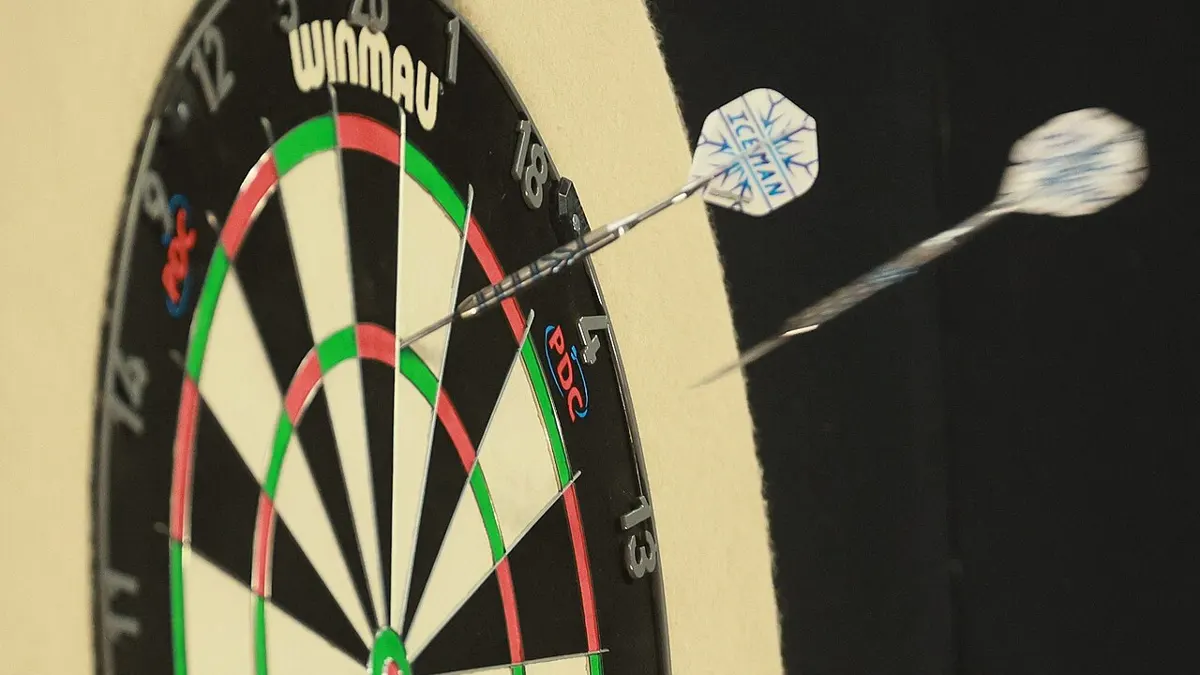
My brother, darts is one of those sports that looks simple on TV. Two people, one board, three arrows each. But when you start betting on it, you quickly learn there's a lot happening under the surface: who throws first in each leg, how the format changes the favourite's chances, why the 180s line moves, and why a "sure" favourite can still lose a short match. This guide walks you through darts betting the way I'd explain it to a friend in Accra or Kumasi who has watched a few matches and now wants to put a few cedis on it without wasting money.
18+ only. This is general information, not a promise of profit. Betting in Ghana is regulated by the Gaming Commission of Ghana under the Gaming Act 2006 (Act 721). Cloudbet, the crypto sportsbook we link to, holds a Curaçao licence and is not licensed by the Gaming Commission of Ghana, so think about that before you sign up anywhere.
The quick version
- Darts matches are played in legs (and in some events, sets of legs). Each leg starts at 501 and must finish on a double or the bullseye.
- The player throwing first in a leg has a real advantage. Winning a leg against the throw is called a break, and breaks decide most matches.
- Longer formats help the stronger player. Short formats create more upsets.
- The popular markets are match winner, leg or set handicap, total legs, correct score, total 180s, most 180s, highest checkout and nine-dart finish.
- Ghana runs on GMT all year, so most big darts nights land in your evening, which makes live betting easy to follow.
- Stake small, flat amounts, keep records, and never treat a heavy favourite as a banker in a short match.
How a darts match actually works
You can't bet on darts well if you don't understand the scoring, so let's start there. The board has 20 numbered segments. Each segment has a thin outer ring that counts double and a thin inner ring that counts treble. In the middle sits the outer bull, worth 25, and the bullseye, worth 50. The bullseye also counts as a double for finishing.
In the standard game, each player starts the leg on 501 and takes turns throwing three darts. Whatever you score is taken away from your total. To win the leg you must hit exactly zero, and the last dart must land in a double or the bullseye. If you score more than you need, or leave yourself on 1, that turn is a bust and your score goes back to what it was before the turn.
A few numbers you'll see in every darts market:
- 180 is the maximum for one turn: three darts in the treble 20.
- 170 is the highest possible checkout: treble 20, treble 20, bullseye.
- A nine-dart finish is a perfect leg: 501 scored and finished with the minimum nine darts.
- The three-dart average is the average score per turn. It's the stat most bettors and commentators use to judge form.
- The checkout percentage is how often a player converts chances at a double into a finished leg.
Legs, sets and why format changes everything
Most professional events are played over legs, for example "first to 6 legs" or "first to 11 legs". Some events, most famously the PDC World Championship, are played in sets, where each set is itself a mini match over legs, usually first to three. Winning a set, not a leg, moves the scoreboard.
Why should you care? Because format changes how often the better player wins. In a short match, one hot spell or a few missed doubles can swing the whole thing. In a long match, the stronger player's quality has more time to show. Here's a simple illustrative model I built to show the effect. Imagine Player A wins 65% of legs when he throws first and 45% of legs when the opponent throws first. Those are made-up but realistic-looking numbers for a slightly stronger player.
| Format (A throws first in leg 1) | A's chance to win the match (model) |
|---|---|
| First to 4 legs | 64.1% |
| First to 6 legs | 66.0% |
| First to 11 legs | 69.9% |
Same two players, same leg-by-leg quality, but the favourite's chances climb as the match gets longer. So when you see a short-format event, expect prices on favourites to be less extreme, and treat any short match as more of a coin flip than the names suggest.
The throw advantage: the most important idea in darts betting
In each leg, one player throws first. With players at a good level, getting the first visit at the board is a big edge, because you reach a finishing position one turn earlier. The throw usually alternates leg by leg, and in set play it alternates set by set as well, so the starting player of each set matters too.
Commentators talk about players "holding throw" (winning the legs they start) and "breaking throw" (winning a leg the opponent started). If two players hold every leg, the match goes the distance. The winner is usually the one who manages one or two breaks. When you look at form, ask two questions about each player:
- How reliably does he hold his own throw against good opponents?
- How often does he break when the opponent is under pressure?
This matters for live betting too. If a player is a leg down but is about to throw first in the next leg, his live price can look more attractive than it really is, or less, depending on how the book prices the throw. Always know who is throwing next before you press the button.
The main darts betting markets
Match winner
The simplest market: who wins the match. Most darts matches can't end level, so it's usually a two-way market. Some formats and special events can finish level, and then the book offers a three-way market including the draw. Read the market name before betting.
Leg handicap and set handicap
The favourite gives the underdog a head start, for example -1.5 legs. A -1.5 favourite has to win by at least two legs. In set play the same idea uses sets. Handicaps let you get a better price on a favourite, or back a decent underdog to stay close.
Total legs or total sets
Over or under a number of legs played. In a first-to-6 match, the total can be anything from 6 (a whitewash) to 11 (a deciding leg). A close, even matchup tends to go long. A mismatch tends to finish early.
Correct score
The exact final score, such as 6-4. High prices, low strike rate. Fun in small amounts, dangerous as a habit.
Total 180s and most 180s
One of the most popular darts markets. You bet on how many maximums are thrown in the match, either combined or by one player, or on which player hits more. This market depends on scoring power and on how many legs are played.
Highest checkout
Which player hits the biggest finish of the match, or whether the highest checkout goes over a line such as 100.5. Some players love going for big finishes, others prefer setting up a simple double.
Nine-dart finish
Yes or no: will anyone hit a perfect leg? In a single match the "yes" is usually priced long, because it's rare. Across a whole tournament it becomes more likely, and some books offer "nine-darter in the tournament" markets.
First leg, next leg and race-to markets
Who wins the first leg, the next leg, or who reaches three legs first. These markets are driven heavily by who throws first.
Outrights
Who wins the whole tournament. Some books pay each way on darts outrights, meaning part of your stake pays out if your player reaches a set stage, such as the final. Each-way terms differ, so check the place terms on your betting site.
Player specials
Things like "player to average over 95" or "player to hit the bull to finish". These are often lightly traded and the margin can be high.
How these markets settle
Settlement rules vary between bookmakers, so read the rules page of the site you use. Common points to check:
- Retirements and walkovers. If a player withdraws before the match starts, match bets are commonly void. If a player retires during a match, rules differ: some books settle on the result declared, some void unsettled markets. Check before you bet.
- 180s markets usually count only maximums thrown in the match itself, not exhibition or warm-up throws.
- Highest checkout ties. If both players hit the same highest checkout, dead-heat rules may apply and your payout can be reduced.
- Format changes. If the organisers change the format, some markets may be voided.
Reading darts odds the right way
Ghanaian betting sites and Cloudbet show decimal odds. Your total return is stake multiplied by the odds, and the implied chance is 1 divided by the odds. Here's a quick example with made-up prices for a first-to-6 match:
| Selection | Odds | Implied chance |
|---|---|---|
| Player A | 1.40 | 71.4% |
| Player B | 2.90 | 34.5% |
| Total | 105.9% |
The total is over 100% because the bookmaker builds in a margin. Here it's roughly 5.9%. If you strip the margin out proportionally, Player A's fair chance is about 67.4% and Player B's about 32.6%. Our earlier model gave Player A about 66.0% in a first-to-6 match when he throws first. So in this made-up example, 1.40 is slightly short for Player A, and Player B at 2.90 is close to fair. That's the type of thinking that separates a careful punter from someone who just backs the famous name. For the conversions, use our odds calculator.
Handicaps in numbers (illustrative)
Using the same 65% hold, 45% break model in a first-to-6 match, here's roughly how the final scores spread out:
| Outcome | Model chance | Fair odds |
|---|---|---|
| A wins (any score) | 66.0% | 1.52 |
| A wins by 2+ legs (-1.5) | 50.4% | 1.98 |
| A wins by 3+ legs (-2.5) | 38.4% | 2.60 |
| Match goes 10 legs or more (over 9.5) | 47.2% | 2.12 |
| Deciding leg, A wins 6-5 | 15.5% | 6.43 |
Notice how quickly the chances drop as the handicap grows. A player who is a clear favourite to win can still be close to a coin flip at -1.5. If a bookmaker offers 2.10 on A -1.5 and you trust your numbers, that's a small edge. If it offers 1.80, you're paying too much. Your numbers will never be perfect, so only bet when the gap between your price and the book's price is clear.
Betting on 180s
180s markets attract a lot of Ghanaian punters because they're exciting: every maximum gets a roar from the crowd. Here's what really drives the count:
- Scoring power. Players who hit the treble 20 often throw more 180s. Check each player's 180s per leg over a decent sample, not just the last match.
- Number of legs. More legs means more visits and more chances. A one-sided match that ends 6-1 gives fewer chances than a 6-5 thriller.
- Format. Set play and longer matches mean more legs on average.
- Style. Some players switch to treble 19 when they're blocked on 20, which can reduce maximums.
An illustrative example: if you estimate a match will produce 6.0 180s on average, a simple Poisson model says the chance of over 5.5 is about 55.4%, fair odds about 1.80. Over 6.5 falls to about 39.4%, fair odds about 2.54. If your estimate were 7.5 instead, over 6.5 would rise to about 62.2%. Small changes in your expected count make big changes to the value, so be honest about uncertainty and don't bet when the line sits right on your estimate.
One trap: total 180s is linked to total legs. If you back a heavy favourite to win easily and also back over 180s, those two bets fight each other, because an easy win means fewer legs.
Highest checkout and checkout markets
The highest checkout market is about finishing style and luck. Some players attack big finishes like 120 or 140 whenever they can. Others play the percentages and set up a double they like. A match with more legs gives more chances for a big finish. The line, often around 100, can be close to a coin flip, and bookmakers know it.
Use these markets for small, fun stakes unless you've really tracked players' checkout habits. One big finish or one missed bull decides them.
18+. Crypto deposits. Cloudbet is licensed in Curaçao, not by the Gaming Commission of Ghana. Ad: we may earn a commission. Bet only what you can afford to lose.
Live darts betting
Darts is great for live betting because the action comes in clear chunks. Each leg takes a couple of minutes, and you can see who's throwing first in the next one. A few tips:
- Know who throws next. A player a leg down who throws first in the next leg isn't in as much trouble as it looks.
- Watch doubles, not just scoring. A player averaging well but missing doubles may turn the match when his finishing returns. A player winning on lucky doubles may struggle later.
- Beware the delay. TV streams and data feeds lag. Prices can be suspended when a player steps up for a finish. Don't try to beat the feed.
- Use "next leg" markets sparingly. They're quick, which makes them easy to chase. Set a limit before the match starts.
- Set play swings. In a sets match, a 2-2 set score can feel very different depending on who throws first in the next set.
Ghana times for big darts nights
Here's good news. Ghana uses GMT all year with no daylight saving. The UK, where many major darts events are played, uses GMT in winter and British Summer Time (GMT+1) from late March to late October. So in winter, UK evening sessions start at the same clock time in Ghana. In summer, an evening session in the UK starts one hour earlier on your clock. A session starting at 7 pm in London in July is 6 pm in Accra. Events held in mainland Europe, which runs one hour ahead of the UK, start earlier again on Ghana time.
The PDC World Championship is usually played at Alexandra Palace in London across the Christmas and New Year period, with afternoon and evening sessions on most days. That means a lot of darts in your evenings over the holidays. Plan your betting budget for the whole tournament before it starts, not one night at a time.
How to research a darts bet from Ghana
You don't need expensive data. A careful routine goes a long way:
- Check the format. First to how many legs? Sets or legs? Who throws first?
- Compare averages over a decent sample, ideally against similar opponents, not just the last match.
- Look at checkout percentages. Finishing wins legs.
- Note recent workload. Darts tours are busy. Some players play floor events, then travel. Tiredness is real.
- Look at stage versus floor form. Some players are comfortable on TV stages with big crowds, others shine in quieter floor events.
- Compare prices on two sites. Darts margins vary between books, especially on 180s and specials.
- Write your own price before you look at the odds. Only bet if the book's odds are clearly better than yours.
A worked pre-match example (made-up numbers)
Let's say a first-to-6 match. You've studied both players and estimate Player A wins about 65% of his own throw legs and breaks about 45% of the time. Your model says A wins the match about 66% of the time, fair odds about 1.52.
- Book offers A at 1.40. Your fair price is 1.52. No bet: the book's odds are worse than fair.
- Book offers A -1.5 legs at 2.10. Your model says about 50.4%, fair 1.98. Small edge. Expected value on a GH₵20 stake: 0.504 × (20 × 2.10) − 20 = GH₵1.17, about 5.8% of stake.
- Book offers over 9.5 legs at 1.95. Your model says about 47.2%, fair 2.12. Expected value: 0.472 × 39 − 20 = −GH₵1.59. Skip.
The point isn't these exact numbers. The point is to compare your price with the book's price on each market and only take the ones where you have an edge. Many nights that means betting nothing, and that's fine.
Staking: protect your cedis
Darts can be streaky. Upsets happen weekly. Use a simple plan:
| Monthly darts budget | Flat stake (2%) | Max bets per night |
|---|---|---|
| GH₵200 | GH₵4 | 3 |
| GH₵500 | GH₵10 | 3 |
| GH₵1,000 | GH₵20 | 4 |
Keep a notebook or a phone spreadsheet: date, event, market, odds, stake, result, and the price you thought was fair. After 50 bets you'll know whether your darts judgement is any good. If it isn't, cut stakes or stop.
About accumulators: a four-fold of darts favourites looks safe and pays nicely. But the margin compounds and one upset kills the slip. Use our accumulator calculator to see how fast the true chance falls as you add legs.
Darts betting mistakes new punters make
- Backing names, not form. Famous players have bad patches. Check recent averages and doubles.
- Ignoring format. A short-format match is much more random than a long one.
- Forgetting the throw. Who throws first in the match and in each set matters.
- Mixing contradictory bets, such as an easy favourite win plus over 180s.
- Chasing on "next leg" markets after losing a pre-match bet.
- Betting nine-darters as a habit. Long prices, rare outcome, and the margin is usually big.
- Not reading settlement rules on retirements and dead heats.
Where to bet on darts from Ghana
Several operators licensed by the Gaming Commission of Ghana offer darts on the bigger events, with cedi stakes and mobile money. Coverage of smaller events and specials can be thin. Offshore crypto books like Cloudbet often list more darts events and markets, including leg handicaps and 180s lines, but Cloudbet is licensed in Curaçao and not by the Gaming Commission of Ghana, so you don't get local regulatory protection. Before using any site, read our guide on whether betting is legal in Ghana and the guide to foreign betting sites in Ghana.
If you're new to betting markets in general, our guide to types of betting in Ghana explains handicaps and totals in more depth, and how to bet on the underdog is useful when a short format makes upsets likely.
Tax on darts winnings
According to the Ghana Revenue Authority, the Income Tax (Amendment) Act 2025 (Act 1129) removed the 10% withholding tax on betting winnings from 2 April 2025. Winnings can still form part of your income for your annual tax return, so keep records. Our sports betting tax guide for Ghana has more detail.
Quick checklist before every darts bet
- Do I know the format and who throws first?
- Have I checked averages and checkout percentages over a decent sample?
- Did I write my own price before looking at the odds?
- Is the book's price clearly better than mine?
- Have I read the settlement rules for this market?
- Is this stake inside my flat-stake plan?
- Am I betting because of value, or because I'm bored or chasing?
Bet responsibly
Darts is quick and exciting, and that makes it easy to bet more than you planned, especially during the holiday period when there's darts every evening. Set a budget, use flat stakes and take breaks. If betting stops being fun or causes stress, talk to someone. The Mental Health Authority's free line is 0800 678 678, and the Gaming Commission of Ghana can be reached on 0800 454 545 about self-exclusion and complaints. More help is on our responsible gambling page.
Questions punters ask
How do you bet on darts?
Pick a match and a market, such as match winner, leg handicap, total 180s or highest checkout, enter your stake and confirm. Check the format and who throws first before you bet.
What does -1.5 legs mean in darts betting?
Your player must win the match by at least two legs. For example, 6-4 wins a -1.5 bet, but 6-5 loses it.
Why is throwing first important in darts?
The player throwing first in a leg reaches a finishing position one turn earlier, so he wins that leg more often. Breaks of throw usually decide matches.
What time are darts matches in Ghana?
Ghana uses GMT all year. UK evening sessions start at the same clock time in winter and one hour earlier on Ghana time during British Summer Time.
Is a nine-darter bet worth it?
Usually only as a small fun bet. Nine-dart finishes are rare in a single match and the margin on those markets is often high.
Can I bet on darts with crypto from Ghana?
Some offshore books like Cloudbet accept crypto for darts betting. Cloudbet is licensed in Curaçao, not by the Gaming Commission of Ghana.
18+. Crypto deposits. Cloudbet is licensed in Curaçao, not by the Gaming Commission of Ghana. Ad: we may earn a commission. Bet only what you can afford to lose.
If betting is causing you stress or money trouble, help is free. The Mental Health Authority's toll-free line is 0800 678 678. For self-exclusion or complaints about a licensed operator, call the Gaming Commission of Ghana toll-free on 0800 454 545 (or 027 469 8935). Source: gamingcommission.gov.gh.