Value Betting Explained for Ghana: Fair Odds, Expected Value, Closing Lines and Why Winning Bets Aren't the Point
Welcome bonus for new players + fast crypto payouts. Just helping a brother out.
18+. Crypto deposits. Cloudbet is licensed in Curaçao, not by the Gaming Commission of Ghana. Ad: we may earn a commission. Bet only what you can afford to lose.
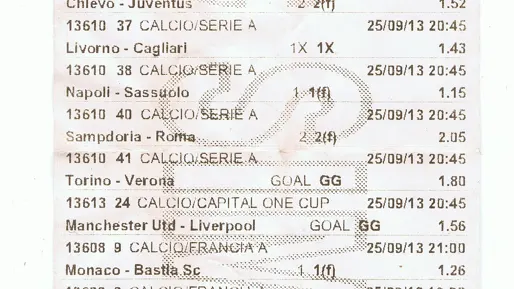
My brother, let me tell you the one idea that changes how you look at every bet slip: a good bet is not a bet that wins. A good bet is one where the price is bigger than the real chance deserves. That's value betting. It sounds simple, and the maths really is simple, but most punters in Ghana never use it. They back the team they like, the "sure" banker in a 10-game accumulator, or whatever a Telegram tipster posted. This guide explains value betting in plain words, with cedi examples, so you can tell the difference between a bet that just feels good and one that actually makes sense.
18+ only. This is general information, not a promise of profit. Value betting does not guarantee winnings, and most people who bet still lose over time. Betting in Ghana is regulated by the Gaming Commission of Ghana under the Gaming Act 2006 (Act 721). Cloudbet, the crypto sportsbook we link to, holds a Curaçao licence and is not licensed by the Gaming Commission of Ghana.
The short version
- Every decimal price hides a chance: 1 divided by the odds. Odds of 2.50 mean the bookmaker is pricing it at 40%.
- A value bet is when you believe the real chance is higher than the price suggests.
- Expected value (EV) = your chance × the odds − 1. Positive means the bet is worth making on your numbers.
- Even with real value you will lose plenty of bets, and you can lose for weeks or months. Value only shows up over hundreds of bets.
- The best quick test of whether you're finding value is the closing line: did the price shorten after you bet?
- Use small flat stakes or a fraction of Kelly, keep records and be honest with yourself.
Odds are just chances in disguise
Ghanaian bookmakers and crypto books like Cloudbet use decimal odds. The total you get back on a winning bet is your stake times the odds. The chance the price implies is 1 divided by the odds:
| Decimal odds | Implied chance | GH₵10 stake returns |
|---|---|---|
| 1.25 | 80.0% | GH₵12.50 |
| 1.50 | 66.7% | GH₵15.00 |
| 2.00 | 50.0% | GH₵20.00 |
| 2.50 | 40.0% | GH₵25.00 |
| 4.00 | 25.0% | GH₵40.00 |
| 10.00 | 10.0% | GH₵100.00 |
Once you see odds as chances, a bet becomes a simple question: is the real chance higher or lower than the number the bookmaker is quoting? Our odds calculator does the conversion for you.
The bookmaker's margin, and how to remove it
Bookmakers don't offer fair prices. They shade every price down a little so the implied chances add up to more than 100%. The extra is their margin. Here's a made-up Ghana Premier League match:
| Result | Odds | Implied chance | Fair chance (margin removed) | Fair odds |
|---|---|---|---|---|
| Home win | 2.05 | 48.78% | 46.98% | 2.13 |
| Draw | 3.40 | 29.41% | 28.33% | 3.53 |
| Away win | 3.90 | 25.64% | 24.69% | 4.05 |
| Total | 103.83% | 100% |
The margin here is about 3.8%. To strip it out, divide each implied chance by the total (103.83%). That's the simplest method, called proportional or normalising. There are fancier ways that take account of bookmakers shading long shots more than favourites, but for most punters the simple method is good enough.
Why bother? Because one way to find value is to compare prices across bookmakers. If the fair price of the home win, based on a sharp, low-margin market, is about 2.13, and another bookmaker is offering 2.25 on the same team, that second price is value even if you know nothing about the match.
Expected value in cedis
Expected value tells you what a bet is worth on average, per cedi staked, if you could repeat it many times:
EV per cedi = (your chance × odds) − 1
A few illustrative examples on a GH₵20 stake:
| Your chance | Odds offered | EV per cedi | EV on GH₵20 | Verdict |
|---|---|---|---|---|
| 50% | 2.20 | +0.10 | +GH₵2.00 | Value |
| 50% | 1.90 | −0.05 | −GH₵1.00 | No bet |
| 30% | 3.60 | +0.08 | +GH₵1.60 | Value |
| 70% | 1.40 | −0.02 | −GH₵0.40 | No bet |
| 10% | 12.00 | +0.20 | +GH₵4.00 | Value, but very swingy |
Look at row four. A 70% favourite is likely to win, so plenty of people would happily back it. But at 1.40 it loses money on average, because 1.40 implies 71.4%, more than its real chance. Row five is the opposite: a 10% shot will lose nine times out of ten, but at 12.00 it's a good bet on those numbers. That's the mindset shift. You're judging the price, not the team.
Where does your chance come from?
Everything above depends on having a believable estimate of the real chance. There are three honest ways to get one:
1. Use a sharp market as your guide
Some bookmakers and betting exchanges run very low margins and take big bets from professionals, so their prices tend to be close to the true chances. If you remove the margin from those prices and find another bookmaker clearly above them, that's value. This method needs no football knowledge at all, just accounts with several bookmakers and patience. The catch: prices move fast, and bookmakers that keep losing to value bettors often limit their accounts.
2. Build a simple model
For football, a common starting point is to estimate each team's expected goals and turn them into result chances with a Poisson model. For tennis, people use serve and return points won. A model doesn't have to be fancy, but it must be tested on past matches before you trust it with money.
3. Specialist knowledge
Some punters know a small league or a niche market better than the bookmaker does: lower divisions, women's football, a specific player market. Bookmakers can't watch everything closely. If you really follow something deeply, that knowledge can be worth more than a model. Be careful, though. Everyone thinks they know football. Prove it with records.
Whatever you use, write your price down before you look at the bookmaker's odds. If you look first, your brain will drift towards their number.
Why value bettors still lose for months
This is the hardest part, and the reason most people give up. Suppose you find bets where the real chance is 50% and you get odds of 2.10. That's an edge of +5% per bet, which is genuinely good. Here's how often you'd still be behind after different numbers of flat GH₵10 bets:
| Number of bets | Expected profit | Typical swing (1 standard deviation) | Chance you're still behind |
|---|---|---|---|
| 50 | +GH₵25 | ±GH₵74 | 33.6% |
| 100 | +GH₵50 | ±GH₵105 | 30.9% |
| 250 | +GH₵125 | ±GH₵166 | 24.3% |
| 500 | +GH₵250 | ±GH₵235 | 15.2% |
| 1,000 | +GH₵500 | ±GH₵332 | 6.9% |
| 2,000 | +GH₵1,000 | ±GH₵470 | 1.7% |
These figures come from the exact binomial maths for this example. Even after 100 good bets, almost one person in three would be down. After 500 bets, one in seven. That's with a real edge. With bigger odds the swings get even wilder: betting 20% shots at 5.50 (also +10% EV), you'd still be behind after 100 bets about 36% of the time and after 1,000 bets about 7% of the time.
So when someone shows you a screenshot of one big winning accumulator, it tells you nothing about whether they're any good. And when you have a bad month, it doesn't automatically mean your method is wrong. You need a long record, and that's why the next tool matters.
Closing line value: the quick report card
The closing line is the last price before the match starts. By kick-off, a lot of information and money has gone into the market, so the closing price is usually the best estimate of the real chance you'll find. If you regularly bet at prices better than the closing price, you're very likely finding value, even if your results haven't caught up yet.
A simple example: you back an away team at 2.40 on Wednesday. By Saturday kick-off the price is 2.15. You beat the closing line by 2.40 ÷ 2.15 − 1 = about 11.6%. Do that consistently and the results usually follow over time. If the prices you take usually drift out after you bet, for example 2.40 to 2.70, that's a warning sign that the market disagrees with you, however good your reasons felt.
Track closing prices in your records. It's the fastest honest feedback in betting.
How much to stake: flat stakes or Kelly
Value is only half the job. Staking decides whether you survive the bad runs.
Flat staking
Bet the same amount every time, for example 1% or 2% of a dedicated betting budget. It's simple, it protects you from big mistakes, and it makes your records easy to read. For most people this is the right choice.
The Kelly criterion
Kelly is a formula that sizes your stake according to your edge: stake fraction = (b × p − q) ÷ b, where b is the odds minus 1, p is your chance and q is 1 − p. With a 50% chance at odds of 2.20, b = 1.2, so (1.2 × 0.5 − 0.5) ÷ 1.2 = 8.3% of your budget. That's a lot for one bet, and Kelly assumes your chance estimate is exactly right, which it never is. If you overestimate your edge, full Kelly can drain your budget fast.
That's why people who use Kelly usually bet a quarter or less of the suggested amount. In this example, quarter Kelly is about 2.1% of the budget, close to a normal flat stake anyway.
| Budget | 1% flat | 2% flat | Quarter Kelly in the example (2.1%) |
|---|---|---|---|
| GH₵200 | GH₵2 | GH₵4 | GH₵4.20 |
| GH₵500 | GH₵5 | GH₵10 | GH₵10.50 |
| GH₵1,000 | GH₵10 | GH₵20 | GH₵21 |
Your betting budget should be money you can afford to lose completely, kept separate from rent, school fees and family money.
18+. Crypto deposits. Cloudbet is licensed in Curaçao, not by the Gaming Commission of Ghana. Ad: we may earn a commission. Bet only what you can afford to lose.
Value betting and accumulators
Ghanaians love an accumulator, and bookmakers love them even more. Here's why. Every leg carries the bookmaker's margin, and those margins multiply. Say each leg in a five-fold has a 5% margin built in. The combined price is roughly 1 ÷ 1.05⁵ = about 78% of the fair price. You're giving up more than a fifth of the fair payout before a ball is kicked.
An accumulator can only be value if most of its legs are value on their own. Stacking five fair-looking favourites doesn't create value; it just stacks margins. If you enjoy accas, keep them small, treat them as entertainment, and use our accumulator calculator to see what you're really getting.
Bonuses, boosts and value
Price boosts and some promotions can create genuine value, because the bookmaker deliberately offers a price above fair. A boost from 2.00 to 2.30 on something that's really 50% is +15% EV. But read the terms: maximum stakes on boosts are often small, and bonus money usually comes with wagering requirements, minimum odds and expiry dates that eat into the value. Work out the real number before you get excited.
Keep honest records
You can't know if you're a value bettor without records. A simple sheet with these columns is enough:
| Date | Match / market | Your price | Odds taken | Closing odds | Stake | Result | Profit / loss |
|---|---|---|---|---|---|---|---|
| Example row | Home win, GPL | 2.10 | 2.30 | 2.18 | GH₵10 | Lost | −GH₵10 |
That example bet lost, but it beat the closing price by about 5.5% and was taken above your own fair price. Over hundreds of bets, that's the kind of losing bet you want more of.
Value betting traps to avoid
- Calling every bet "value". If you decide the chance after seeing the odds, you're just justifying a bet you already wanted.
- Tiny edges. If your estimate is 52% and the price implies 50%, your estimate is probably not that precise. Wait for clearer gaps.
- Judging by short-term results. Ten wins in a row or ten losses in a row are both normal in betting.
- Raising stakes after wins or chasing losses after bad runs.
- Paying for "value tips" or "fixed matches". Real edges are small and fragile. Anyone selling sure wins is selling a story.
- Ignoring limits. Bookmakers can cut maximum stakes for winning players. Plan for it.
- Forgetting the margin on markets like correct score, player props and specials, where it's often much bigger than on match results.
Where to practise from Ghana
You can apply value thinking with any bookmaker. Operators licensed by the Gaming Commission of Ghana let you stake in cedis with mobile money. Offshore crypto books like Cloudbet often have competitive prices on big leagues and a wide range of markets, but Cloudbet is licensed in Curaçao and not by the Gaming Commission of Ghana, so you don't get local regulatory protection. Read our guides on whether betting is legal in Ghana, foreign betting sites in Ghana and betting sites in Ghana with high odds before you choose.
New to the markets themselves? Our guide to types of betting in Ghana covers handicaps, totals and more, and how to bet on the underdog shows where long-shot value often hides.
Tax on winnings
According to the Ghana Revenue Authority, the Income Tax (Amendment) Act 2025 (Act 1129) removed the 10% withholding tax on betting winnings from 2 April 2025. Winnings can still form part of your income for your annual tax return, which is one more reason to keep good records. See our sports betting tax guide for Ghana.
A value checklist for every bet
- Did I write my own chance before seeing the price?
- Have I removed the bookmaker's margin, or compared with a sharp price?
- Is the EV clearly positive, not just a percent or two?
- Is the stake inside my flat-stake or fractional-Kelly plan?
- Will I record the closing price after the match starts?
- Would I still make this bet if it were a team I don't care about?
Bet responsibly
Value betting is a way of thinking, not a money machine. Most people who bet lose money over time, and even good bettors go through long losing runs. Only bet what you can afford to lose, set limits and take breaks. If betting stops being fun or causes stress, reach out. The Mental Health Authority's free line is 0800 678 678, and the Gaming Commission of Ghana can be reached on 0800 454 545 about self-exclusion and complaints. More help is on our responsible gambling page.
Questions punters ask
What is value betting in simple terms?
Value betting means betting only when the odds are bigger than the real chance deserves. For example, backing something with a 50% chance at odds of 2.20.
How do I calculate expected value on a bet?
Multiply your estimated chance by the decimal odds and subtract 1. A 50% chance at 2.20 gives 0.5 × 2.2 − 1 = +0.10, or 10 pesewas per cedi staked on average.
Does value betting guarantee profit in Ghana?
No. Even with a real edge you can lose for hundreds of bets, your chance estimates can be wrong, and bookmakers may limit winning accounts.
What is closing line value?
It's how your odds compare with the final price before kick-off. Regularly getting better odds than the closing price is a strong sign you're finding value.
Should I use the Kelly criterion?
Full Kelly is risky because it assumes your chances are exact. Most people use flat stakes of 1% to 2% of their budget, or a quarter of the Kelly stake or less.
Can accumulators be value bets?
Rarely. The bookmaker's margin multiplies with every leg, so an accumulator is only value if most of its legs are value on their own.
18+. Crypto deposits. Cloudbet is licensed in Curaçao, not by the Gaming Commission of Ghana. Ad: we may earn a commission. Bet only what you can afford to lose.
If betting is causing you stress or money trouble, help is free. The Mental Health Authority's toll-free line is 0800 678 678. For self-exclusion or complaints about a licensed operator, call the Gaming Commission of Ghana toll-free on 0800 454 545 (or 027 469 8935). Source: gamingcommission.gov.gh.